Blog Archives
Q is for… (#atozchallenge)
Q is for…
Quintessential
I love this word because it is so fun to say. According to the Oxford Dictionary of English (2003) it means: ‘representing the most perfect or typical example of quality or class.’
I think it can be used colloquially to suggest indicators that are typical of a particular person or group of people. I’ve most heard it said in relation to something being quintessentially British.
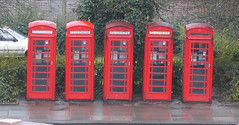
And because quint relates to 5 I would like to know from you, any of the following:
Five indicators of the quintessential writer
Five indicators of the quintessential occupational therapist
Five indicators that are quintessentially you
My 5 quintessential Kirsty indicators are:
- I am always, at least, 5 minutes late to everything
- I am always blowing my nose or sneezing (especially in the last two weeks)
- I talk with my hands and make odd gestures to represent what I’m blathering about (you turn the gas down – anyone?)
- If I stay anywhere overnight I don’t come alone
- I am glued to my gadgets
(those of you who know me would you agree or is there anything else that is quintessentially me?)
Looking forward to your quintessential quintessentials!

Share this on Facebook, Twitter and Google+

P is for… (#atozchallenge)
P is for…
Pegasus

Last November whilst writing my NaNoWriMo 50,000 words (which I’m hoping to add another 80,000 to in May and June this year) I wrote that my main character kept a copy of C.S. Lewis’ The Magician’s Nephew nearby.
I remember being distinctly annoyed that they always leave this book (and the Horse and his Boy) out of film adaptations because I think they could look wonderful on screen although they aren’t as ‘exctiing’ action-wise as the other books in the series.
One of the things I had remembered from the book was the Pegasus horse and on Saturday Nov 27th the Daily Mail ran a story called Pegasus rides again where a picture of a bull that looks like it has wings was shown. I’ve kept this clipping in the pocket of my moleskin notebook which I used during the challenge and took it as a sign. I’ve since re-read the TMN and there are some echoes from this in my book, spooky, huh?
I love intertextuality and when books and films and art etc speak to other works, so I plan to keep these echoes there even though the stories are very different.
I’m pretty sure I wanted a ride on a Pegasus pony when I was small and I remember having Pegasus (and Flutter) My Little Ponies (I incidentally love the My Little Pony film – smooze anyone?).
What mythical ceature inspires you?
Share this on Facebook, Twitter and Google+

O is for… (#atozchallenge)
O is for…
Occupational Therapy, Occupational Science and all things Occupation
I shall start with a couple of definitions:
‘Occupation: A group of activities that has personal and sociocultural meaning, is named within a culture and supports participation in society. Occupations can be categorized as self-care, productivity and/or leisure.’ (Creek, 2010 p. 25)
‘Engagement: A sense of involvement, choice, positive meaning and commitment while performing an occupation or activity.’ (Creek, 2010 p. 25)
In short then Occupational Therapists help people engage with the occupations in their lives. Additionally we can use these same occupations in our intervention plans with clients.
A fellow OT, Bridgett Piernik-Yoder, completing the a-z challenge on all things OT, posted for D on the domain of the OT and looks at what OTs do in more detail. Please check out her post here.
The British Association/College of Occupational Therapists has recently produced a range of videos showing how OTs might work with clients with a number of conditions.
Occupational Therapists could however work with anybody who is experiencing a change in their normal occupational pattern (or occupational disruption) whether they have a recognised disability or medical condition or not. Some of the potential areas I personally think OTs could work are, with new parents (what a disruption), older people entering retirement (it can be more challenging than you think having all that free time ;)) and students starting university (I know I could have done with some additional cookery and domestic skills!).

Prior to becoming a lecturer in OT I worked in physical rehabilitation, most recently with older adults following a fall or with adults of any age post stroke. I facilitated clients to work on goals as diverse as making themselves a hot drink and carrying it through to the lounge to learning how to type and send an e-mail to preparing someone to return to employment. Interventions were as varied as fabricating hand splints, taking someone shopping to work on their memory and sequencing, providing equipment at home, teaching alternative strategies, such as how to dress using one handed techniques, working on strength and balance and falls safety in a falls group and completing a work place visit to assess what demands would be placed on someone with lasting cognitive impairment.
I have to say that I loved this variety and the contact with clients and their carers and I do sometimes miss it but I really enjoy educating future practitioners too.
One of the best things about returning to academia has been revisiting the theory that underpins occupational therapy practice and really gaining an appreciation of my, and our, profession’s core underlying belief that occupational engagement can affect our health and wellbeing. It is this that has driven my topic for my PhD research. An occupational exploration of creative writing as an occupation.
Another definition for you now:
‘Occupational Science: Academic discipline of the social sciences aimed at producing a body of knowledge on occupation through theory generation, and systematic, disciplined methods of inquiry.’ (Creek, 2010, p. 29)
Everybody is now focussed on delivering evidence based interventions and occupational science aims to help provide this supporting knowledge for our profession as well as society as a whole. (Just a note that Occupational Scientists are not always OTs, but can amd should be anyone interested in the science of doing).
Personally I am not going to be looking at creative writing as therapy (at least not for for my PhD, maybe later) but I will be exploring why writers write and what that can teach us about that occupation and occupations in general.
Wish me luck.
I hope that this post has helped you understand OT a little better; it is a fantastic profession to be a part of and I really hope the value of our services are seen as vital to however health and social care ends up being structured in the UK. On my to do list is to speak to my local MP about Occupational Therapy, why not speak to yours too?
References
Creek, J., 2010. The Core Concepts of Occupational Therapy: a dynamic framework for practice. London: Jessica Kingsley Publishers.
I would like to say the above represents my own opinions and may not reflect that of all OTs.
Any questions or comments please share below.


 kirstyes