Category Archives: April A-Z Challenge
R is for… (#atozchallenge)
- R is for…Reflection (and Referencing)

Following on from my C is for… Continuing Professional Development post today I will be discussing a method of CPD that is free – reflection.
If someone asked you to describe your face you might mention eye colour, hair colour/length etc. This is basic description and if you gave that information to someone you were due to meet they might find you difficult to pick out of a crowd.
If you did this whilst looking in a mirror, you might be able to give more specific, distinguishing features, a mole you had forgotten or a scratch that until then you didn’t know you had. You might also then start thinking about how you could have received the scratch, evaluating what you had been doing.
Reflection that enables learning comes from really putting something under the microscope, examining and re-examining it. Reflection should lead to understanding, insight, and goals for development. You might decide, based on ‘research/evidence’ (e.g. that acrylic nails don’t appear to scratch), that you need a manicure!
Reflection or looking at a situation in detail is used widely by health and social care professionals to inform personal and professional development, to learn from events and situations and to make links between theory and practice. When people first start reflecting there may be a tendency to purely describe an event but there is a need to move beyond this to ‘unpick’ what has happened and make conclusions and future action points.

Critical Reflection – some quotes
Critical reflection is: – “using the reflective process to look systematically and rigorously at our own practice.”
And using reflection “to learn from our actions, to challenge established theory and, most importantly, to make a real difference to our practice.” (Rolfe et al 2001, p. xi).
“Emphasis is placed on WHY something happened and an investigation of the issues involved, not on a purely descriptive account of what or how it happened.” (Brown and Rutter 2005, p. 8).
“Reflection aids and enhances deeper learning as it makes us aware of what happened during an experience and helps us make connections with what we already know.” (Brown and Rutter 2005, p. 13).
“We need to reflect not just on the content of the situation but also on our thoughts – those which underpinned judgements and decisions – and also the way we arrived at those thoughts – the processes underpinned by our abilities and values.” (Brown and Rutter 2005, p.13).
“Reflection on some experiences may go even further and change deep or personally held beliefs, assumptions or inner values. If this happens you may need the extra support of someone you trust to help you deal with it.” (Brown and Rutter 2005, p. 22).

Ways to Reflect
Critical reflection and writing are linked. According to Moon (1999 cited Brown and Rutter 2005, p.14), writing:
• Forces us to spend the time
• Helps us focus and sift material by slowing us down
• Forces us to organise and clarify our thoughts so we can sequence them
• Gives us a structure
• Gives control – we choose which points to make – enables identification and prioritising of material
• Helps us to know if we do understand something by attempting to explain it
• Can help a deeper understanding of something as we work through it and explain it
• Can record a train of thought and relate it to the past, present and future
• Can initiate new ideas, connections, questions etc.
Use of structured models of reflection
These take you through events step-by-step aiming to draw information out of you that leads to critical reflection. Often reflective models are used ‘after the fact’ especially when a situation has not gone to plan. It is however, also important to review events when things go smoothly too, to evaluate why and allow successful repetition.
Click on the links or locate the references below to find out more about each approach.
Kolb’s Reflective Cycle (1984) – Concrete experience, reflective observation, abstract conceptualisation, active experimentation.
Gibbs’ Model (1988) – Description, Feeling, Evaluation, Analysis, Conclusion, Action Plan.
Johns’ Model (1996) – A series of questions to answer
Rolfe et al (2001) What? So What? Now What? – questions to consider under each of the three heading
Schön – Reflection in action/Reflection on action (1984) – Schön distinguished between reflection in action and on action with the first being ‘spontaneous, skilful execution’ within a situation and the latter being stepping back and explaining the execution.
More recently I have discovered Boud and Walker’s three stage model of reflection (1990) cited in Jackie Andrews (2000) BJOT article where she demonstrates use of this model. In contrast to many of the other models situations are selected for reflection prior to them occurring. The practitioner then completes preparatory reflection and follows this with reflection in action and reflection on action (as Schön previously suggested). This example shows how supporting references and links to literature can be made to enhance the depth of reflection and make links between theory, research and practice. I strongly suggest reading this article to see how she applies the model.
Additionally you could use more creative strategies for evaluating a scenario (Rolfe et al 2001):
- Writing the unsent letter
- Writing to another person
- Writing as the other
- Story telling
- Poetry as reflective writing
- Audio recording reflection
- Video recording reflection
- Reflecting with others, e.g. Peers in a workplace or even through the use of social media
- (It is important to maintain confidentiality at all times when documenting and sharing reflections and that no client identifiable information should remain. It is also advisable to only mention the clinical area you were working in and not name specific workplaces and colleagues to protect them also).
- Andrews, J. 2000. The Value of Reflective Practice: a Student Case Study. British Journal of Occupational Therapy, 63(8), 396-398.
- Brown, K. and Rutter, L. 2005. Critical Thinking and Analysis: A guide to enhancing Reflection, Learning and Writing for Post Qualifying Social Work Programmes. Bournemouth: Institute of Health and Community Studies, Bournemouth University.
- Gibbs, G., 1988. Learning by Doing: A Guide to Teaching and Learning Methods. Oxford: Further Education Unit.
- Johns, C. 1996. Using a Reflective Model of Nursing and Guided Reflection. Nursing Standard. 11( 2), 34-38.
- Kolb, D. 1984. Experiential Learning experience as a source of learning and development. New Jersey: Prentice Hall.
- Rolfe, G., Freshwater, D. and Jasper, M. 2001. Critical Reflection for Nursing and the helping professions: a user’s guide. Hampshire: Palgrave.
- Schön, D. 1983. The Reflective Practitioner: How Professionals Think in Action. London: Basic Books.
Reflective statements on your CPD evidence
Not all evidence in a CPD portfolio needs to be a written reflection, you may include evidence on you from other people, examples of leaflets you have developed, assessments you have completed, etc. For each piece of evidence in your CPD portfolio ensure you know WHY you have included it and HOW it affects your DEVELOPMENT. Try to make this clear to the anyone who might read your portfolio. You can use brief reflective statements on the evidence itself, e.g.
• I chose to include this because it demonstrates that I have…
• I was really happy with this because…
• I think this shows my development in (type of skill) because…
It is important to recognise that reflection is a personal thing and you will not want to (and indeed it may not be appropriate to) share all reflective writing you complete. You may just highlight a few key points to share.

References
Please share your comments/questions; I hope this has been a helpful post.

Share this on Facebook, Twitter and Google+

Q is for… (#atozchallenge)
Q is for…
Quintessential
I love this word because it is so fun to say. According to the Oxford Dictionary of English (2003) it means: ‘representing the most perfect or typical example of quality or class.’
I think it can be used colloquially to suggest indicators that are typical of a particular person or group of people. I’ve most heard it said in relation to something being quintessentially British.
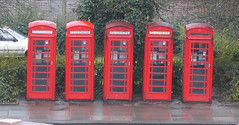
And because quint relates to 5 I would like to know from you, any of the following:
Five indicators of the quintessential writer
Five indicators of the quintessential occupational therapist
Five indicators that are quintessentially you
My 5 quintessential Kirsty indicators are:
- I am always, at least, 5 minutes late to everything
- I am always blowing my nose or sneezing (especially in the last two weeks)
- I talk with my hands and make odd gestures to represent what I’m blathering about (you turn the gas down – anyone?)
- If I stay anywhere overnight I don’t come alone
- I am glued to my gadgets
(those of you who know me would you agree or is there anything else that is quintessentially me?)
Looking forward to your quintessential quintessentials!
Share this on Facebook, Twitter and Google+

P is for… (#atozchallenge)
P is for…
Pegasus

Last November whilst writing my NaNoWriMo 50,000 words (which I’m hoping to add another 80,000 to in May and June this year) I wrote that my main character kept a copy of C.S. Lewis’ The Magician’s Nephew nearby.
I remember being distinctly annoyed that they always leave this book (and the Horse and his Boy) out of film adaptations because I think they could look wonderful on screen although they aren’t as ‘exctiing’ action-wise as the other books in the series.
One of the things I had remembered from the book was the Pegasus horse and on Saturday Nov 27th the Daily Mail ran a story called Pegasus rides again where a picture of a bull that looks like it has wings was shown. I’ve kept this clipping in the pocket of my moleskin notebook which I used during the challenge and took it as a sign. I’ve since re-read the TMN and there are some echoes from this in my book, spooky, huh?
I love intertextuality and when books and films and art etc speak to other works, so I plan to keep these echoes there even though the stories are very different.
I’m pretty sure I wanted a ride on a Pegasus pony when I was small and I remember having Pegasus (and Flutter) My Little Ponies (I incidentally love the My Little Pony film – smooze anyone?).
What mythical ceature inspires you?


 kirstyes