Monthly Archives: April 2011
It's All About Me
It’s All About Me
Thanks to Stacey over at It Takes a Woman for tagging me and challenging me to do this – please see her post for details on where the challenge originated.
Which living person do you most admire, and why? J.K. Rowling – see my H is for…post. I would so dearly love to create a world so fully realised as she has.
When were you happiest? This is going to sound really bad but according to my sister I have been happiest during a couple of periods where I had extended time off work sick (once following a car accident and once with a major case of overactive thyroid). It’s not even that I didn’t like either of the jobs I was in at the time, and I was actually sick, but just that I like having time to myself more. I’ve reduced my hours at work since and I really love having Fridays off – I just need to start to be more productive with my writing on them.
What was your most embarrassing moment? When I was on holiday in New Zealand in 2001 we went swimming with wild dolphins. Being wild they swam off pretty quickly and instead of getting everyone back on deck we got into the boom netting of the boat and raced after them. As we were whooshing along I realised that my bosoms had slipped out of my swimming costume and were on display so I hooked my arm over the netting to replace them. As well as the mortification of this I ended up with the most sever sunburn I’ve ever had and a rope burn on my underarm. I couldn’t get contacts in either so I never even really saw the dolphins.
Aside from property, what’s the most expensive thing you’ve bought? My car, a lovely silver Ford Fiesta called Luna bought using the scrappage scheme. Other than that possible by iPad.
What is your most treasured possession? A cuddly toy I’ve had since I was one – Sultan.
Where would you like to live? I love Poole and where I live now. I’m a homebody and it took a lot of persuasion to get me to move out of my parents after uni so I think it will take me lots to move out of my current house. I currently share with my sister but as she’s loved up I’m not quite sure what will happen 😦
What’s your favourite smell? Cadbury’s chocolate, especially after it has been melted in the microwave.
Who would play you in the film of your life? This was a hard one for me and what put me off posting this before but I was watching Bones earlier and I think Emily Deschanel would be a good choice, mainly because she is very good at being a geek and laughing at nerdy jokes.
What is your favourite book? Harry Potter 1-7 (Duh) and The Stand.
What is your most unappealing habit? Well I have recently been reminded that an annoying me-ism is my nose blowing (which has been atrocious today despite me remembering to take my allergy meds) – accompanying that is my disgusting habit of throwing tissues towards the bin and then having a little pile to collect and deposit due to my very poor aim.
What would be your fancy dress costume of choice? I love my Halloween costume which you can see me in elsewhere on the blog. I also once dressed up as Buffy as Red Riding Hood from a Halloween episode of Buffy and The Statue of Liberty and Santa stuck up a chimney (I kind of like dressing up).
What is your earliest memory? I don’t know – my memory is pretty bad. I know that I once left Sultan in a shop and caused my parents grief by being very upset until he was safe back in my arms – not sure I remember this though.
What is your guiltiest pleasure? Apart from chocolate watching and reading things that are targeted at people younger than me. I think I will forever be a teen at heart.
What do you owe your parents? Absolutely everything and a fair bit of money I suspect. As a lecturer seeing students struggling with finances I am so grateful to my parents for supporting me and my sister through university so that we didn’t end up with huge debt at the end.
To whom would you most like to say sorry, and why? Anybody I’ve ever upset badly.
What or who is the greatest love of your life? My family – all of them.
What does love feel like? Being tucked up in a clean bed with no-where to be.
What was the best kiss of your life? I’m sincerely hoping I haven’t had it yet.
Which words or phrases do you most overuse? somewhen, probably, take care, If the apocalypse comes…beep me. I’m sure there are others – anyone???
What is the worst job you’ve done? Working in a factory in the uni holidays sticking balloons and things on kids magazines. Pretty good pay but mind numbingly boring, I need a bit of mental challenge and there were probably a lot of kids with wonkily stuck on balloons.
If you could edit your past, what would you change? Editing isn’t one of my most refined talents. I guess there are a few things I might have preferred not to have happened (see next answer) but then I wouldn’t be who I am if I edited anything, would I?
What is the closest you’ve come to death? I was a front seat passenger in a head on car crash with two motorbikes. I did think I might die but I don’t think I was ever in real danger, just frightened, especially going under anaesthetic for the first time.
What do you consider your greatest achievement? Again this is one that I hope is to come shortly. I wrote 50,000 words of a novel in November and I plan to add another 80.000 in the next few months. Other than that I am proud of all the study I have completed.
When did you last cry, and why? A few hours ago because of the thought of having to move. I don’t cope well with change generally but feel bad that I might make others feel bad by getting upset.
How do you relax? Mostly by spending time alone, reading, watching TV, writing, sleeping.
What single thing would improve the quality of your life? Not feeling so tired all the time.
What is the most important lesson life has taught you? I still think I’m learning to be honest, more recently that life is too short and you need to be kind to yourself. I’m still working on implementing that lesson.
Hope that hasn’t been too scary an insight into me.
If you fancy having a go yourself please do – come back and leave me a link to your post if you do though.
Share this on Facebook, Twitter and Google+

R is for… (#atozchallenge)
- R is for…Reflection (and Referencing)

Following on from my C is for… Continuing Professional Development post today I will be discussing a method of CPD that is free – reflection.
If someone asked you to describe your face you might mention eye colour, hair colour/length etc. This is basic description and if you gave that information to someone you were due to meet they might find you difficult to pick out of a crowd.
If you did this whilst looking in a mirror, you might be able to give more specific, distinguishing features, a mole you had forgotten or a scratch that until then you didn’t know you had. You might also then start thinking about how you could have received the scratch, evaluating what you had been doing.
Reflection that enables learning comes from really putting something under the microscope, examining and re-examining it. Reflection should lead to understanding, insight, and goals for development. You might decide, based on ‘research/evidence’ (e.g. that acrylic nails don’t appear to scratch), that you need a manicure!
Reflection or looking at a situation in detail is used widely by health and social care professionals to inform personal and professional development, to learn from events and situations and to make links between theory and practice. When people first start reflecting there may be a tendency to purely describe an event but there is a need to move beyond this to ‘unpick’ what has happened and make conclusions and future action points.

Critical Reflection – some quotes
Critical reflection is: – “using the reflective process to look systematically and rigorously at our own practice.”
And using reflection “to learn from our actions, to challenge established theory and, most importantly, to make a real difference to our practice.” (Rolfe et al 2001, p. xi).
“Emphasis is placed on WHY something happened and an investigation of the issues involved, not on a purely descriptive account of what or how it happened.” (Brown and Rutter 2005, p. 8).
“Reflection aids and enhances deeper learning as it makes us aware of what happened during an experience and helps us make connections with what we already know.” (Brown and Rutter 2005, p. 13).
“We need to reflect not just on the content of the situation but also on our thoughts – those which underpinned judgements and decisions – and also the way we arrived at those thoughts – the processes underpinned by our abilities and values.” (Brown and Rutter 2005, p.13).
“Reflection on some experiences may go even further and change deep or personally held beliefs, assumptions or inner values. If this happens you may need the extra support of someone you trust to help you deal with it.” (Brown and Rutter 2005, p. 22).

Ways to Reflect
Critical reflection and writing are linked. According to Moon (1999 cited Brown and Rutter 2005, p.14), writing:
• Forces us to spend the time
• Helps us focus and sift material by slowing us down
• Forces us to organise and clarify our thoughts so we can sequence them
• Gives us a structure
• Gives control – we choose which points to make – enables identification and prioritising of material
• Helps us to know if we do understand something by attempting to explain it
• Can help a deeper understanding of something as we work through it and explain it
• Can record a train of thought and relate it to the past, present and future
• Can initiate new ideas, connections, questions etc.
Use of structured models of reflection
These take you through events step-by-step aiming to draw information out of you that leads to critical reflection. Often reflective models are used ‘after the fact’ especially when a situation has not gone to plan. It is however, also important to review events when things go smoothly too, to evaluate why and allow successful repetition.
Click on the links or locate the references below to find out more about each approach.
Kolb’s Reflective Cycle (1984) – Concrete experience, reflective observation, abstract conceptualisation, active experimentation.
Gibbs’ Model (1988) – Description, Feeling, Evaluation, Analysis, Conclusion, Action Plan.
Johns’ Model (1996) – A series of questions to answer
Rolfe et al (2001) What? So What? Now What? – questions to consider under each of the three heading
Schön – Reflection in action/Reflection on action (1984) – Schön distinguished between reflection in action and on action with the first being ‘spontaneous, skilful execution’ within a situation and the latter being stepping back and explaining the execution.
More recently I have discovered Boud and Walker’s three stage model of reflection (1990) cited in Jackie Andrews (2000) BJOT article where she demonstrates use of this model. In contrast to many of the other models situations are selected for reflection prior to them occurring. The practitioner then completes preparatory reflection and follows this with reflection in action and reflection on action (as Schön previously suggested). This example shows how supporting references and links to literature can be made to enhance the depth of reflection and make links between theory, research and practice. I strongly suggest reading this article to see how she applies the model.
Additionally you could use more creative strategies for evaluating a scenario (Rolfe et al 2001):
- Writing the unsent letter
- Writing to another person
- Writing as the other
- Story telling
- Poetry as reflective writing
- Audio recording reflection
- Video recording reflection
- Reflecting with others, e.g. Peers in a workplace or even through the use of social media
- (It is important to maintain confidentiality at all times when documenting and sharing reflections and that no client identifiable information should remain. It is also advisable to only mention the clinical area you were working in and not name specific workplaces and colleagues to protect them also).
- Andrews, J. 2000. The Value of Reflective Practice: a Student Case Study. British Journal of Occupational Therapy, 63(8), 396-398.
- Brown, K. and Rutter, L. 2005. Critical Thinking and Analysis: A guide to enhancing Reflection, Learning and Writing for Post Qualifying Social Work Programmes. Bournemouth: Institute of Health and Community Studies, Bournemouth University.
- Gibbs, G., 1988. Learning by Doing: A Guide to Teaching and Learning Methods. Oxford: Further Education Unit.
- Johns, C. 1996. Using a Reflective Model of Nursing and Guided Reflection. Nursing Standard. 11( 2), 34-38.
- Kolb, D. 1984. Experiential Learning experience as a source of learning and development. New Jersey: Prentice Hall.
- Rolfe, G., Freshwater, D. and Jasper, M. 2001. Critical Reflection for Nursing and the helping professions: a user’s guide. Hampshire: Palgrave.
- Schön, D. 1983. The Reflective Practitioner: How Professionals Think in Action. London: Basic Books.
Reflective statements on your CPD evidence
Not all evidence in a CPD portfolio needs to be a written reflection, you may include evidence on you from other people, examples of leaflets you have developed, assessments you have completed, etc. For each piece of evidence in your CPD portfolio ensure you know WHY you have included it and HOW it affects your DEVELOPMENT. Try to make this clear to the anyone who might read your portfolio. You can use brief reflective statements on the evidence itself, e.g.
• I chose to include this because it demonstrates that I have…
• I was really happy with this because…
• I think this shows my development in (type of skill) because…
It is important to recognise that reflection is a personal thing and you will not want to (and indeed it may not be appropriate to) share all reflective writing you complete. You may just highlight a few key points to share.

References
Please share your comments/questions; I hope this has been a helpful post.

Share this on Facebook, Twitter and Google+

Q is for… (#atozchallenge)
Q is for…
Quintessential
I love this word because it is so fun to say. According to the Oxford Dictionary of English (2003) it means: ‘representing the most perfect or typical example of quality or class.’
I think it can be used colloquially to suggest indicators that are typical of a particular person or group of people. I’ve most heard it said in relation to something being quintessentially British.
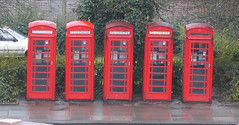
And because quint relates to 5 I would like to know from you, any of the following:
Five indicators of the quintessential writer
Five indicators of the quintessential occupational therapist
Five indicators that are quintessentially you
My 5 quintessential Kirsty indicators are:
- I am always, at least, 5 minutes late to everything
- I am always blowing my nose or sneezing (especially in the last two weeks)
- I talk with my hands and make odd gestures to represent what I’m blathering about (you turn the gas down – anyone?)
- If I stay anywhere overnight I don’t come alone
- I am glued to my gadgets
(those of you who know me would you agree or is there anything else that is quintessentially me?)
Looking forward to your quintessential quintessentials!


 kirstyes