Blog Archives
J is for… Journalling and Reflexivity #AtoZChallenge
J is for… Journalling and Reflexivity
One of the first pieces of advice I received when starting my PhD was to start keeping a reflective diary or journal (sorry sidebar giggle thinking back to the diary(ladies)/journal(mens) scenes in A Very Potter Senior Year that I watched yesterday). I did do this for a while (by hand) but then stopped for whatever reason, I also haven’t been back to read through in a while).
This challenge is meant to be restarting this for me and hopefully I’ll keep going. I do have a private blog set up which I will probably use more of the time because I’m sure that often I will be journalling incoherent ramblings and also I wonder about how much I should be sharing openly. A benefit of keeping it electronically will be that it is searchable too. I hope to most occasional, more coherent thoughts here too.
In ‘academic’ terms journalling is about reflexivity. Tracking thought processes, noting biases and how this relates to decisions made. How I influence my research. In qualitative research these reflections often become integrated into the thesis, sometimes as a separate chapter, other times throughout.
‘Thus reflexivity involves not getting rid of the self, but doubling the self: distancing ourselves from ourselves to a greater or lesser extent, so that we have a sense of standing outside ourselves and observing what we are doing and thinking.’ (Hunt and Sampson 2006 p4).
Some of this reflexivity might leave us feeling vulnerable and that might be a reason to hide this processes, however Hunt and Sampson (2006) suggest that we learn to be more objective when we share and invite comments from others. They say this more about creative writing but it probably rings true with thoughts on the research process.
One of my current thoughts as I am writing this is about the juxtaposition (at least I think this is the right word) about writing about creative writing. The book I am referencing is about reflexivity with creative writing rather than research so it is speaking to me on two levels, as a guidebook to the process and as a reflection back on meaning and why I engage with writing so much.
Hunt, C. And Sampson, F. (2006) Writing: self and reflexivity. Hampshire, UK: Palgrave Macmillan.
What do you think about PhD (or research in general) blogging – do we give up our secrets too soon, leaving us open to ‘originality poaching’, or does transparency throughout aid early dissemination with the potential of reaching a wider audience?
I’ve just joined bloglovin to make it easier to follow the blogs I like – it has a tablet app and you should see a widget in the sidebar which will add my blog to your bloglovin feed. Here’s my profile.

Share this on Facebook, Twitter and Google+

J is for… Journeyman and Joan of Arcadia #AtoZChallenge
J is for… Journeyman and Joan of Arcadia
Hi everyone – sorry for the delay of the J posts – I had a bit of a grump on but now I’ve had some time with my lovely sis and some chocolate I’m ready – going to try and do the K posts too.
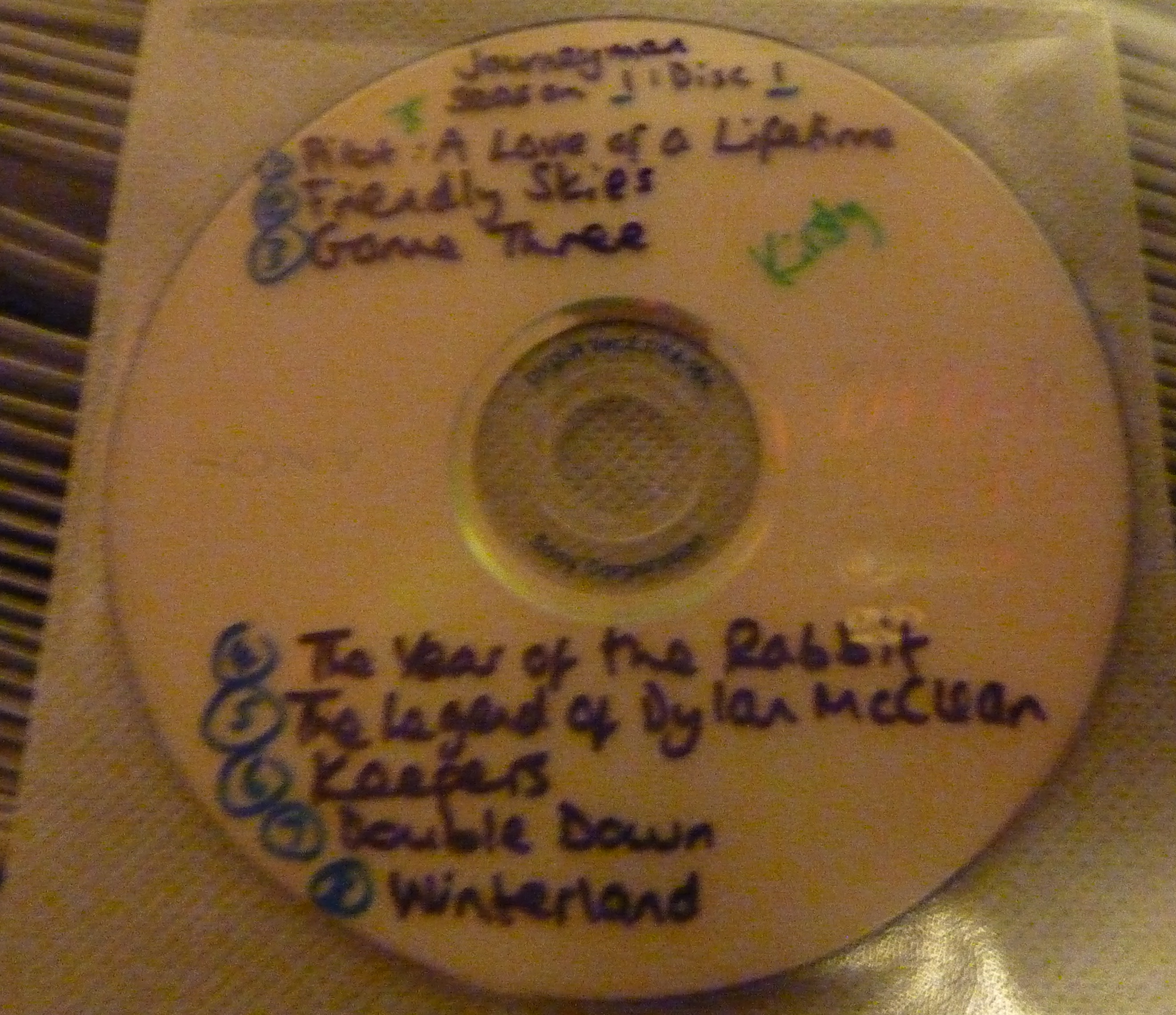
Just the one season of 13 episodes of (in 2007). Kevin McKidd plays Dan Vasser a reporter who travels back in time to ‘right some aspect of wrong’. He jumps back (with only a few minutes warning) and forth to his present life and it shows the affect his extra curricular activity has on his relationships. He isn’t the only time traveller in the mix either. Like many of the shows I seem to like this one was cancelled too soon.
I think the main reason I liked this (other than Kevin McKidd) is that I am interested by Time Travel – so much so that the novels I am working on have time travel featured in them. It also reminded me of Quantum Leap (see my Q post) and Tru Calling (which I’m going to add to my T post).
As you can see I only have my homemade copy but I just found out it is being released on DVD on 29th April – here’s a sponsored link to Amazon. It says there’s a 20 minute feature with the writers etc about what might have happened had it not been cancelled.
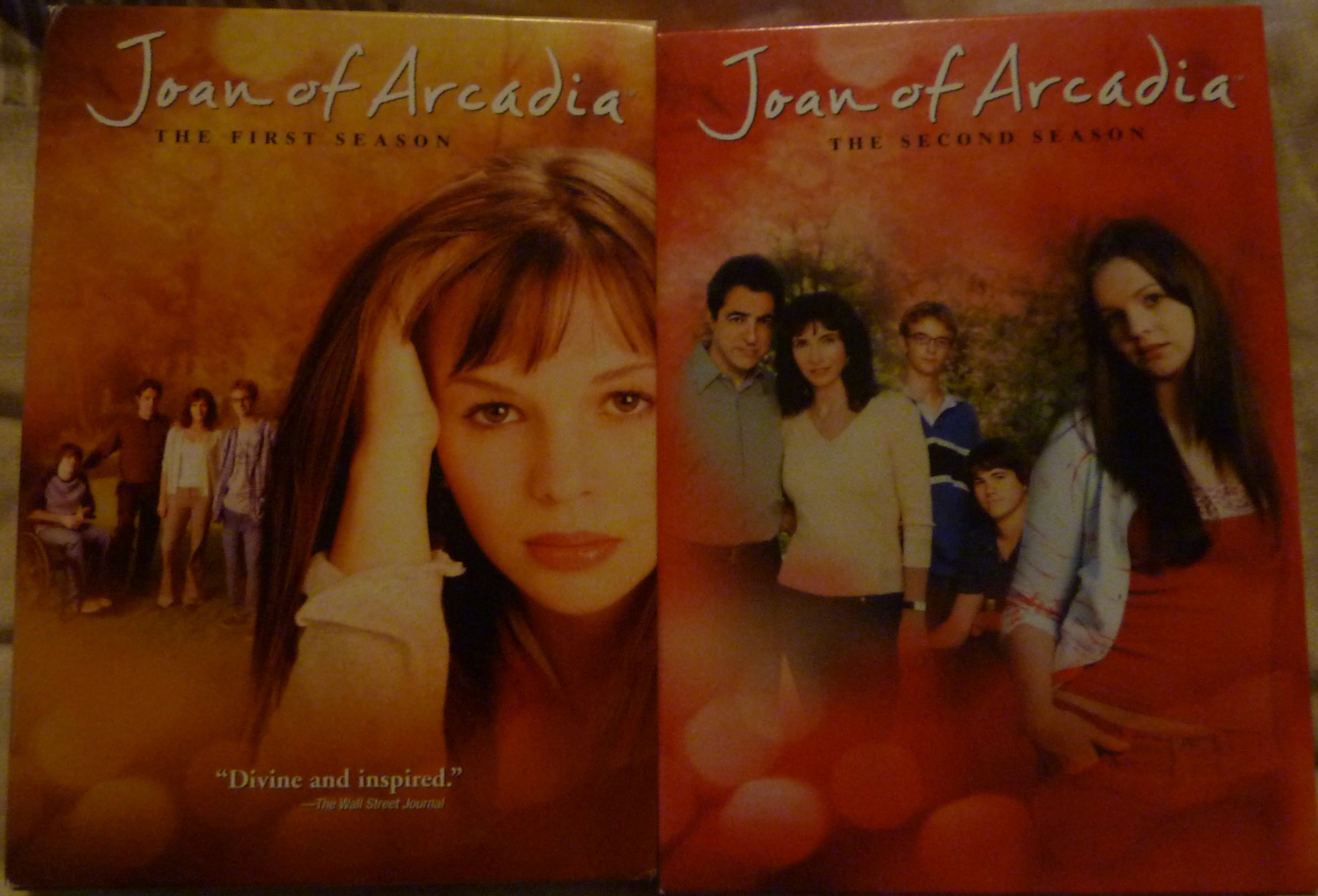
Two seasons (2003 – 2005) about a teenager who talks to God. Joan is played by Amber Tamblyn (daughter of Tom Thumb – Russ Tamblyn – loved that film).
The strength of JoA was in its characters – Joan and all of her family and her friends at school seem so real that you just accept that God keeps cropping up (‘dressed’ as a different person each time). Her father is a police chief and her older brother has been paralysed in an accident; life is challenging but God keeps asking her to help other people.
Interesting actually that both of today’s series link to my novel in some way. Ages ago I decided that my protagonist Jane would look like Amber – you can see who else I am picturing on my Pinterest board here. My J post last year was about Jane too.
The episodes that stick out to me when reviewing the summaries on imdb are:
The Boat – Joan of Ark??
St Joan – Joan of Arc
Silence – Joan is ill with Lyme disease – is God just a hallucination?
Queen of the Zombies – Joan tries out for the school play
Joan’s Queen of the Zombies song – yes that’s God boogying along in the wings.
The series also has Joan Osborne’s ‘One of Us’ as the title track. There is something about a title track that settles you in. I like Charmed’s too (but was aware of the song from The Craft soundtrack before I started watching – obviously a ‘witchy’ song).
What do you think of the two shows above?
What time would you travel back to and why?
What form would you like God to take if he/she/they ever popped by to talk to you?
Which TV series title track is your favourite?
I’ve just joined bloglovin to make it easier to follow the blogs I like – it has a tablet app and you should see a widget in the sidebar which will add my blog to your bloglovin feed. Here’s my profile.
Share this on Facebook, Twitter and Google+

I is for… Intertextuality #AtoZChallenge
I is for… Intertextuality (Book)
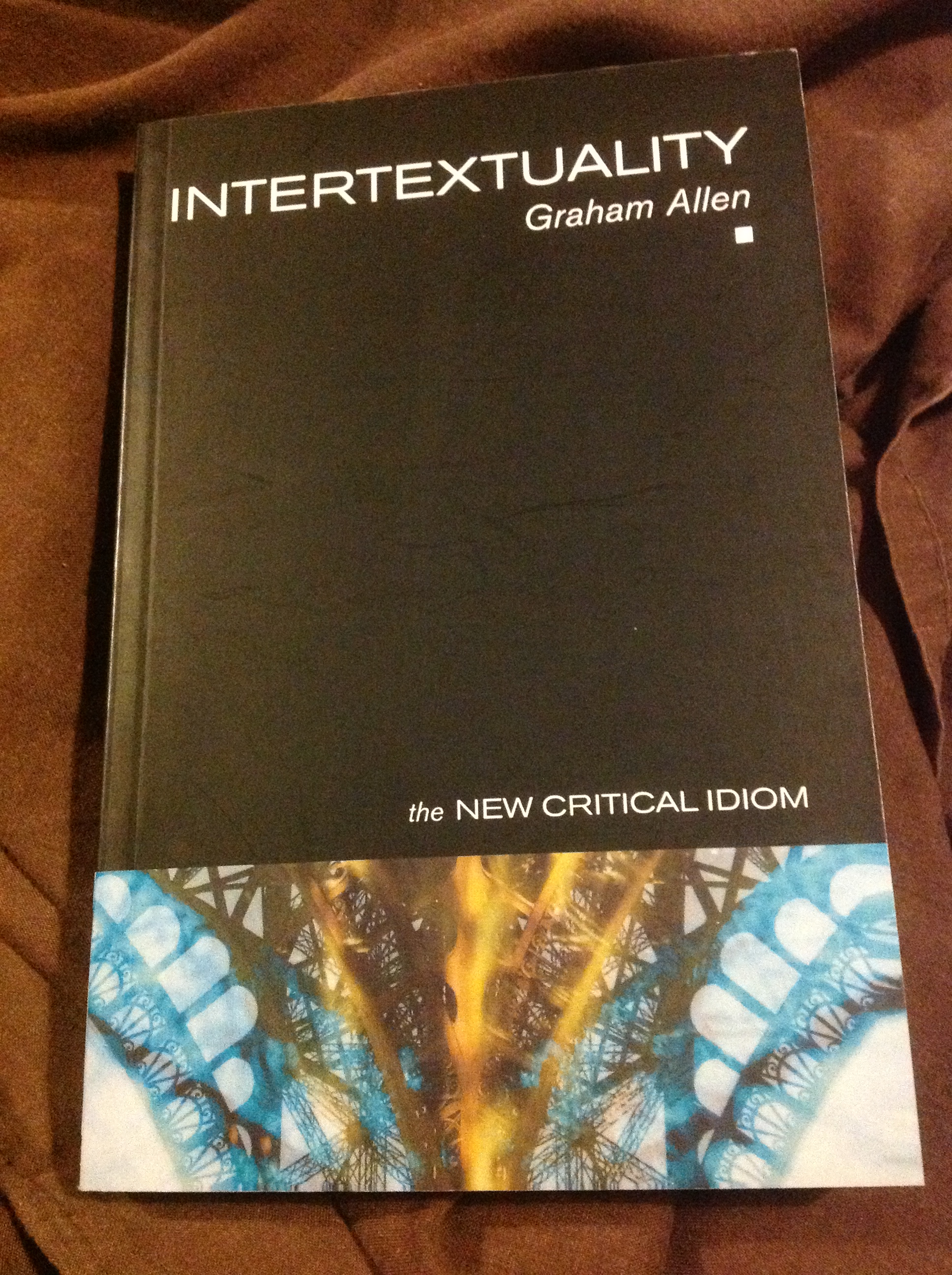
Image taken by me
On the back cover of Intertextuality by Graham Allen (2000) it is written that:
‘No Text has meaning alone.
All texts have meaning in relation to other texts.’
I’ve mentioned before that I sometimes struggle with analysing writing in relation to only that text alone preferring in some cases to better understand context or being very accepting of multiple analysis. Comparison to previous texts I’ve read also plays its part.
This text is an academic one, a study of intertextuality within the context of literary criticism.
It discusses Bahtkin and Dialogism (again), Roland Barthes and the idea of the Death of the Author, feminism, postmodernism and lots of isms and textualities in general.
I think this book will be of interest to my PhD because of its discussion about relations between books. I also wonder whether the idea of the Death of the Author might be interesting to explore more with reference to what happens post publication. We now have unprecedented access to authors of new books and can ask them their meanings and intent – maybe the author is on the rise from the grave? Does this mean we have to zombie follow them and not accept our own creation of meaning? I know that as a writer some of my writing appears subconscious and I then read meaning back into it.
If you have ever been to a psychic you will probably have heard people say that we cling to aspects that relate to us and ignore the bits where they go totally off track. I wonder if this is how we relate to books too.

Image from: http://cinderellainrubbershoes.tumblr.com/post/23815224624/writing-is-perhaps-the-greatest-of-human
For example I have seen the quote above a lot recently and it really can feel like this is happening sometimes, that someone is writing out the thoughts in your head. But I suspect that often books have as much that we don’t relate to as that which we do – but the relations are more powerful and longer lasting though.
Another book I need to read properly rather than skim so apologies if I have misrepresented any of the theories – my comments are just rambles at the moment.
If you are a writer what other books do you nod to in your work?
When looking back at the meaning of things you have written do your ideas change over time or stay static?
As a reader do you find yourself making links to other books you’ve read, films and TV series you’ve seen and, of course your own life experiences?


 kirstyes