Category Archives: April A-Z Challenge
B is for… Beginning #AtoZChallenge
B is for… Beginning
I have been “doing my PhD” for a good while now though I only registered in October 2011. I’m doing it part time and I seem to have been starting it FOR.EV.ER. I came to a realisation about why this is after supervision the other day. It is because whenever I have been pressed to come up with my research question it hasn’t felt right, it doesn’t seem to encompass what I want to explore.
At the moment I am toying with a new idea and it is one that is still sitting comfortably a week or so later and so I hope to move forward with it.
I submitted the abstract below to an internal Post Graduate Researchers’ Conference – it wasn’t accepted as an oral paper (so substitute the word reading for listening) but I will be making it into a poster and I will share on the blog when I’m done. This summarises how I have been feeling about the beginning of the process. It also links to my theme for tomorrow, C is for… Conferences.
Round and Round in Circles and Back to Square One
This autoethnographic account of my early PhD journey (inspired by Taylor 2008) will explore the confusion I have experienced from trying to narrow my research focus on a topic that is so meaningful to me. A PhD is not just about the one research project but is also about training in research (Marshall and Green 2010). It is therefore important to develop skills of analysis and to be able to rationalise decisions made. A sense of frustration can be created by exploring the ‘dark side of the moon’, only to come back to the ‘light side’ again. What is important though is returning from that journey with the acceptance that where I have settled is the right place for me. My account will be subjective, but by sharing, a dialogue will be opened with the experiences and emotions of those listening (Ellis 2004).
Ellis, C., 2004. The Ethnographic I: a methodological novel about autoethnography. Walnut Creek, CA: AltaMira Press.
Marshall, S. and Green, N., 2010. Your PhD Companion. 3rd ed. Oxford: How To Books.
Taylor, J., 2008. An Autoethnographic Exploration of an Occupation: Doing a PhD. British Journal of Occupational Therapy. 71 (5), 176-184.
……..
For me though I think I will still feel as if I am beginning until I am in the data collection process…then, as they say in the vernacular, this shit is going to get real.
If you’ve completed a PhD or are further in the process than me – how did you find beginning? When did it feel real for you? Does the title of my poster-to-be fit with your experience?

Share this on Facebook, Twitter and Google+

B is for… Buffy the Vampire Slayer #AtoZChallenge
B is for… Buffy the Vampire Slayer
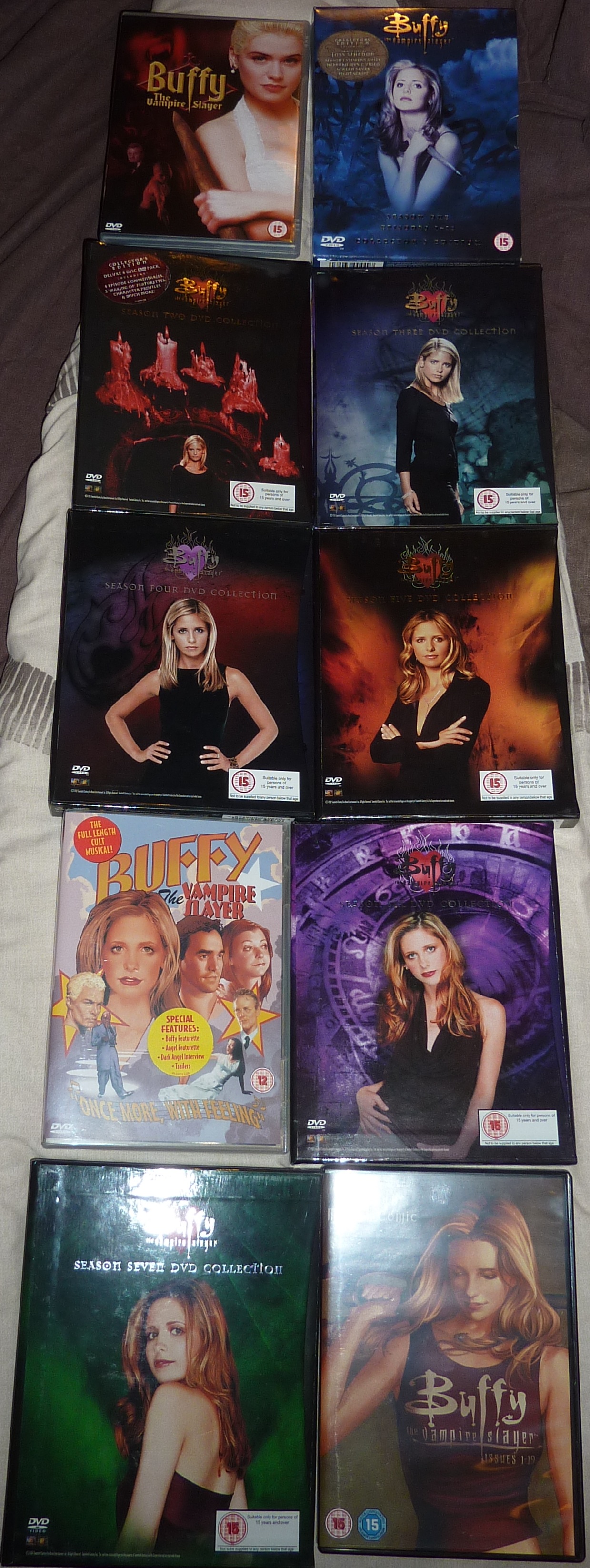
And again with the Joss Whedonverse. I have been a fan of Buffy since and even despite of the movie (yes, you can see from the picture that I even own it on DVD!! And you can see my original cinema ticket on the post here). Thankfully the series was much less hammy and got a good run of seven seasons from 1997-2003. I did buy the ‘graphic novel’ type eighth season but wasn’t so keen.
My top 5 episodes from Buffy are: really, really hard to narrrow down but I’m going to be good (unlike I was on this post where I realise I’ve done this theme a little before – good to see my top episodes have stayed fairly static – Quite entertaining to see my episode write up is virtually identical too despite being written two years apart)
Once More With Feeling – Season 6 Episode 7
I absolutely adore the musical episode – own the separate DVD (even though the episode is in the season boxset) and the Soundtrack. I’m Under Your Spell is a great song and I was pretty impressed with all the singing.
Hush – Season 4 Episode 10
The gentleman are one of the freakiest monsters of all time. I used to be able to do their face and scare my sister silly. The fact there is no speaking in most of the episode is impressive and I love the bit where Buffy is miming staking a vampire!!!

Normal Again – Season 6 Episode 17
I’ve seen this in other supernatural series (such as in tomorrow’s C is for… Charmed) but Buffy really nails it with the last shot leaving us wondering is this all a figment of her psychosis.
Doppelgangland – Season 3 Episode 16
Good Willow playing Evil Vampire Willow – Bored now!

The Pack – Season 1 Episode 6
Hyena Xander is smoking hot
I have to give a quick mention to the scene with the Yellow Crayons – makes me weep.
In fact I could go on about Buffy all day and don’t think there are many episodes I wouldn’t be happy to watch – though what was with the Cheese man in the season 4 closer!!
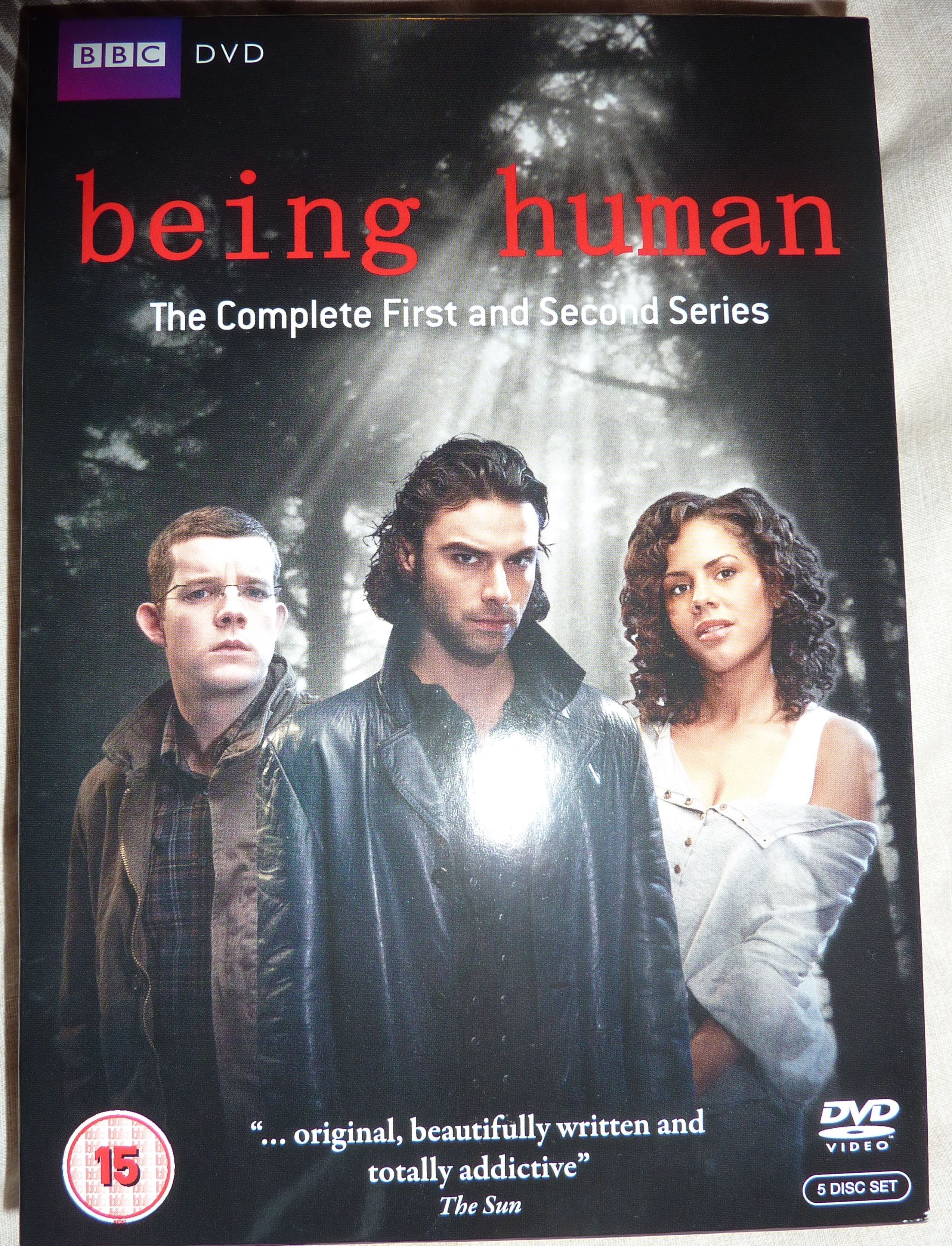
And a quick nod to Being Human
…
Are you a Buffy fan? Which is your top episode and why?
Have you ever found that you’ve already blogged about something, almost written an identical post and not realised?
Share this on Facebook, Twitter and Google+

A is for… Autoethnography #AtoZChallenge
A is for… Autoethnography
Not surprisingly, as a writer who is studying creative writing from an occupational science perspective, I am taking a qualitative approach to my research, looking at words and not numbers.
My parents and grandparents, who are watching me surrounded by books, think all of this research terminology seems like double dutch. So I will try my hardest to make this interesting and understandable.
I will start briefly by describing Ethnography – this is research that explores a cultural group, one that develops ‘shared patterns of behavior, beliefs, and language.’ (Creswell 2007 p. 68). Ethnographers usually observe this culture and document the meanings and interpret what they witness. Ellis (2004 p.26) breaks the word down to ethno – people or culture and graphy – writing or describing. When we add auto we add the self.
Autoethnography therefore ‘utilizes the researchers’ autobiographical data to analyze and interpret their cultural assumptions.’ (Chang 2008 p. 9).
So, yes, in short, my research is going to be about me and my experiences of engaging in the occupation of creative writing. But, I don’t think I’m quite so vain to think it is all about me or that it’s all about you (cue song)
so I am exploring the concept of Collaborative Autoethnography (Chang et al 2013).
I am making the presumption that writers belong to a ‘writing’ culture, especially those who are online.
The other aspect that appeals to me about autoethnography is the idea that you can be creative when writing it up, using story, poetry etc. It is much more appealing to me to write a novel than a thesis and I hope I can mix the two. Ellis (2004) presents her methodological book in novel format which makes it much more engaging to me as a reader.
Autoethnography does appear to mean lots of things to lots of different people and so I need to read more and make some decisions on what it will mean to me.
Chang (2008 p.49) highlights that ‘autoethnographers face the initial challenge of identifying a research focus…’ – That is what tomorrow’s post B is for…Beginnings will be about.
If you are a writer do you feel you belong to a ‘writing’ culture?
If you have experiences of using or reading autoethnography please do share them.
Chang, H. 2008. Autoethnography As Method. Walnut Creek, CA: Left Coast Press.
Chang, H., Ngunjiri, F.W., and Hernandez, K-A,C. 2013. Collaborative Autoethnography. Walnut Creek, CA: Left Coast Press.
Creswell, J.W. 2007. Qualitative Inquiry & Research Design: choosing among five approaches. 2nd ed. Thousand Oaks, CA: Sage.
Ellis, C. 2004. The Ethnographic I: a methodological novel about autoethnography. Walnut Creek, CA: AltaMira Press.


 kirstyes

