Blog Archives

Mirror, Mirror by David Allott – Blog Tour Book Review
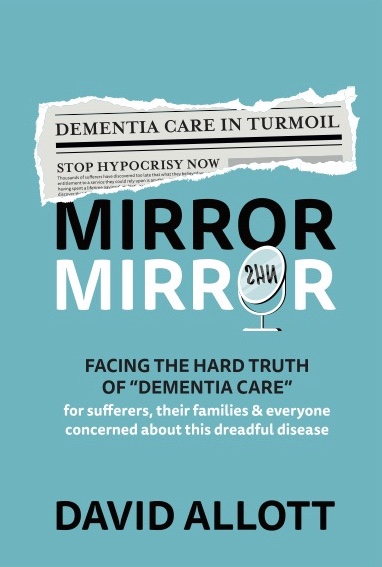
A bit of a different book review from me today with a non-fiction book. This one looking at experiences of “Dementia Care”.
About the Book
The true cost of anything is the price we pay for the alternative.
David and Margaret’s story is, sadly, not unique. Margaret was diagnosed with Alzheimer’s in early 2018. This is the real-life story of the husband and wife’s journey to seek support and care over the past few years. David shares their experience of dementia “care” so that anyone caring for – or living with – dementia can learn from what happened to them, and hopefully avoid the many obstacles, challenges and pitfalls that they had to overcome. One in every 14 people aged 65+ have dementia, that’s around 900,000 people, and the numbers are increasing rapidly every year. This book is an invaluable resource for anyone embarking on the journey to seek care and support for their loved one once symptoms of dementia set in. From getting a diagnosis to getting the right kind of support for them – and you – written with raw passion and from the heart, Mirror, Mirror is dedicated to the memory of Margaret. And to help every other person feeling lost right now.
An important read released around the time of World Alzheimer’s Month in September, and World Alzheimer’s Day on 23rd September.
An essential book for readers of Gail Sheey, Steph Booth and Marie Williams.
About the Author
David Allott learned his trade in Hotel and Catering Management at Blackpool Catering College. It was a short time after this, whilst working as a Senior Assistant Manager in a newly opened large restaurant in Levenshume
that he met Margaret, who was soon to be, his lifelong and forever loved partner of over 51 years. They were married in December 1971 and embarked on a joint career in Hotel Management. Over the years, David and Margaret lived and worked in all three home nations, as well as spending three years in the USA. David’s book Mirror Mirror is not only a record of this final chapter in Margaret’s life, but is written in honour and remembrance of her, and in the hope that it will be of help to others who also must travel this long and lonely road, whilst at the same time throwing a spotlight of the disgraceful conduct of all those involved in trying to deprive the most needy people in society of their legal rights.
Twitter/X – @inkpublishingservices
Instagram – @inkpublishingservices
What I Thought
As an Occupational Therapist who has worked in the NHS, as well as someone with chronic illnesses that means I am a user of NHS services, like many in this country, I am a full supporter of this National Institution and its founding principle to be free at the point of delivery. There can however, be no doubt that over the 13 years the Conservative government have now ruled, alongside the additional disasters of Brexit and the COVID-19 Pandemic, that our NHS has taken a battering. David talks also about the impact of successive Governments’ failure to protect this vital service. Care offered sadly often seems to not be what we expect, nor as staff members, what we want to give. The NHS has always been stronger at urgent care and dealing with non chronic conditions. Anyone who cannot be ‘cured’ by traditional ‘medical’ means or that have complex and multifactorial needs often slip through the gaps and David tells his and Margaret’s story here.
David does acknowledge the individual staff who have supported them and this is a critique of services and not individuals, although as individuals we all certainly play our part – whether in a positive or negative way is up to all of us to determine. David suggests wearing the NHS logo upside down so it reads SHN – its corresponding catchphrase then becomes ‘Stop Hypocrisy Now’. Be warned that this is a political book because healthcare is a human right and as such it is political. If you are not ready to engage at this level I would love to challenge you to do it anyway but this isn’t simply a personal story of struggle but a rallying call. You may not agree with everything David says – but you cannot deny his passion.
At the heart of this book though is a love story between husband and wife, and David’s righteous anger about how Margaret was treated (or not) is palpable. He shares details of the early indications of the disease taking hold through to letters between him and the healthcare team and assessments of her function at different stages of the disease.
In the book at large though is a discussion of societal ableism and the seeming determination that disabled lives simply mean less. My colleges and I at AbleOTUK often hear stories of disabled colleagues being treated inequitably and of course if this happens to our own, how do these attitudes filter out to those for whom we care? David talks about the false dichotomy between medical and social needs – a dichotomy often reinforced because social care is means tested and healthcare is not! (Currently I would say this is somewhat debatable).
David underpins what he is saying with a discussion of concepts such as justice and injustice and looks at the legal protections that people can try to enact and at the concept of NHS Continuing Healthcare (something I only actually got involved in a couple of times in my career and honestly didn’t know too much about before then). This book provides a comprehensive overview where David has used his personal insights, his and Margaret’s experience and learning and works this into practical tips on how to work within a broken system, in the hopes that others supporting loved ones with Dementia don’t face the same battle.
In my personal experience with Long Covid, even as someone with a healthcare background I have found it challenging to access the right care. In my work in Long Covid Advocacy I am collaborating with others to make good healthcare something that isn’t reliant on postcode or the Individual practitioner you get. David says in Chapter 2 – “If you can’t ask the right question, you will find it extremely difficult to get the right knowledge. You are then reliant on gaining knowledge purely by chance.”
The level of detail on the specific policies does mean that the reader in years to come will have to review the current framework as these things often change (and that change at a policy level takes ….a while…. to filter out into general practice. But this provides an excellent framework for using knowledge as power and will remain a good starting point for families facing these issues.
In this book David focuses on Dementia, a truly challenging disease that sadly can take a person away from their loved ones years before their life has ended. But there are supports that can be put in place to improve the quality of life for the individual and their loved ones. This relies on early detection, continual monitoring, truly listening to and understanding needs and this takes time which clinicians are not often allowed. I still professionally believe that it is better to give someone one or two hour-long appointments on diagnosis with a new condition and find about them, their life, their wants and work collaboratively on a plan and over a 10 minute consultation and a lifetime of trying to chase for answers. David does share Margaret’s story and like any others could find the content triggering where it reflects their own experience or where it appears to lay out a challenging experience to come. But for more it will echo their lives back to them and make them feel not as alone.
This book to me demonstrates the immense power of lived experience to shape and inform quality healthcare. As healthcare professionals we can work generally seeing people with a wide variety of conditions or we can specialise, but honestly without that personal insight of living something day in and out our education is not complete. Sure someone facing a new diagnosis may need more guidance and support but give those families 3 months, 6 month, a year, 5 years etc. and they become the expert. Where people have the skills they read up and learn everything they can, to give them and their loved ones the best chances at living a quality life. But again the NHS does need to be able to offer this level of insight to families who can’t – for whatever reason – get an honorary degree in Dementia.
Using peer support and peer groups can seemingly be frowned upon by some healthcare practitioners but it is key for many in accessing the knowledge and rallying troops to face the many battles people have to face – let’s not get into the discussion of benefits here or I might not shut up. David shares some key charities and organisations that may be able to support individuals.
David also makes the excellent point about having discussions of what you might do in these sorts of situations early including topics such as Power of Attorney but in the U.K. in particular we are particularly avoidant of talking about disease and death and then those conversations are left to when emotions are running high or sadly to times when individuals no longer have the capacity to make decisions.
There is a lot of information in this book which could be quite overwhelming. But it doesn’t have to all be read at once and can certainly be referred back to. But who is the book for?
Just people who have familial experience of Dementia.
I say No.
Anyone who has the potential to influence the lives of someone with Dementia?
Yes.
For Politicians and Senior Health and Social Care Managers definitely.
For Individual Health and Social Care Practitioners whether they work in Dementia services or not – Yes.
I would certainly recommend to fellow OTs who want to become more aware about the impacts of the day to day decisions we make for individuals and wider society at large. Sadly these troubles are replicated with other conditions and we can learn much from David and Margaret’s story.
Apologies that this has become more of a reflection that a pure review of the book but in itself I believe that demonstrates the power narratives like this can bring. Publishers take note. Stories can change the world but we need a critical mass of them so they are not able to satisfy our ableist view of these as ‘inspiration porn’ about the brave families doing battle with the system but they are used as manuals to break down and build up systems that truly work for all.
Huge thanks to Literally PR for the gifted copy for the purposes of an honest review and to David for sharing his and Margaret’s Story. Do check out reviews from others on the tour to see how they responded too.
Share this on Facebook, Twitter and Google+


Honor Girl by Maggie Thrash
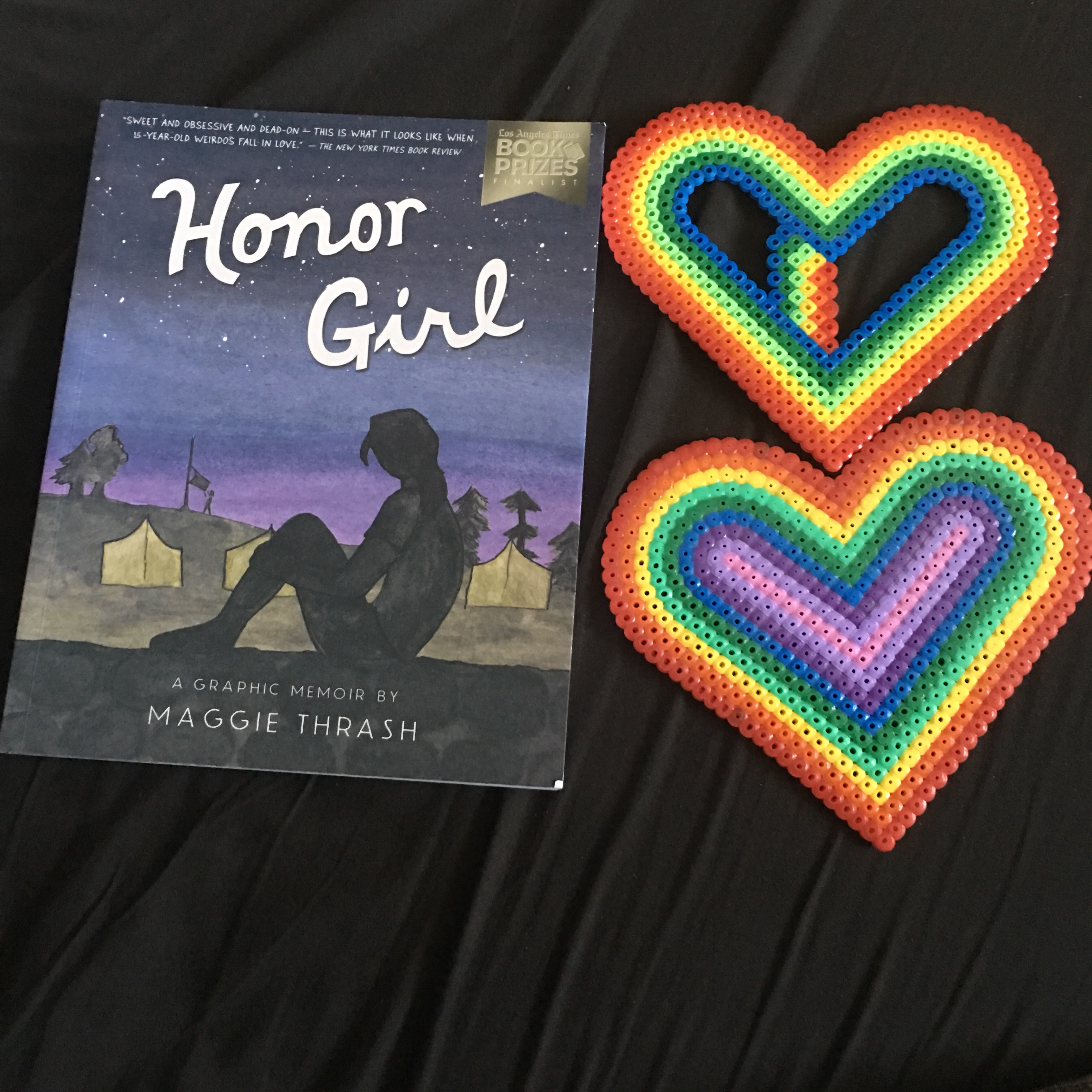
With London Pride being yesterday I thought that time was right to finally review this Graphic Memoir by Maggie Thrash.
Synopsis
Maggie is fifteen and has basically spent every summer of her life at one-hundred-year-old Camp Bellflower for Girls, where her days are full of a pleasant, peaceful sort of nothing. Until one confounding moment of innocent physical contact catapults her into gut-twisting love with Erin, an older, wiser, and surprisingly – at least to Maggie – female counselor. When it seems as if Erin might feel the same way about Maggie, it’s too much for either Maggie or Camp Bellflower to endure, let alone understand.
Author
Maggie Thrash is a staff writer for Rookie, a popular online magazine for teenage girls. This is her first book. She lives in Delaware.
Honor Girl was first published in 2015 and was a Los Angeles Times Book Prize Finalist.
What I thought
This is a non-fiction book, based on true events and is presented as a graphic novel. It is about a girl discovering her sexual attraction to another, older girl at summer camp.
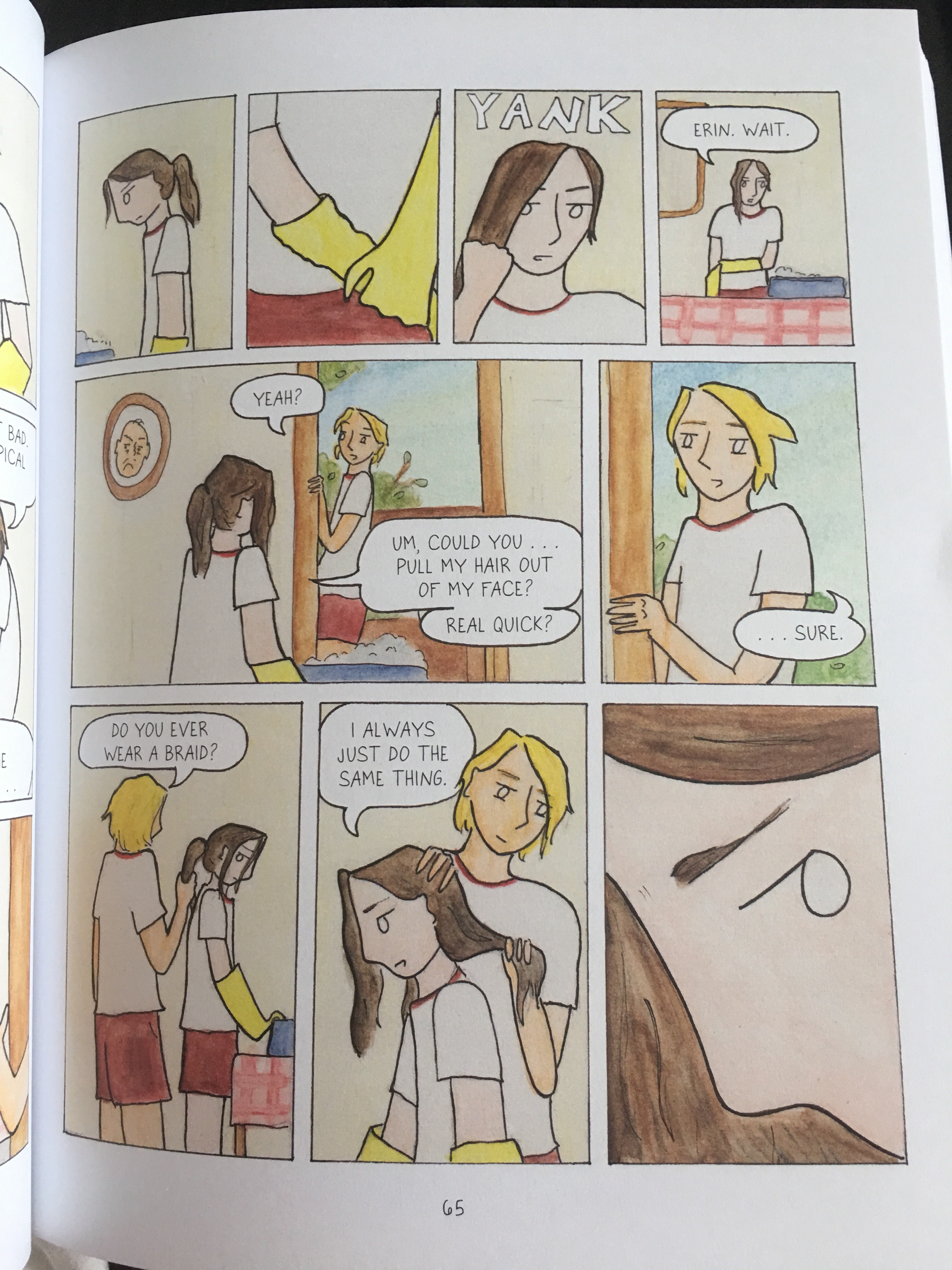
I thought it was excellently done and a great use of the genre. The book is illustrated in watercolour pencil and pen images which were finished digitally and even the font was designed by Maggie. The art is fairly simplistic but there’s something powerful in its simplicity especially in the close up images like below.
I’ve seen some criticism of the ‘ending’ but I really liked the fact that is was realistic. Nothing against fictional coming out stories but the happily ever after they often portray does not often represent the stories of many teens in this situation. I also thought Maggie’s confliction was represented powerfully.
I read some of the one star reviews of this book on goodreads and whilst I agree with some of the concerns highlighted over this being about a relationship between an older 19 year old camp counselor and a 15 year old girl I can’t help but wonder how vehemently those concerns would be expressed if the counselor had been male and the 15 year old female. In fact I’ve seen many older boy/younger girl stories like this fictionally and in real life that are seen as ‘part of the norm’.
This is set in a summer camp in southern America a ‘few’ years ago so usual camp activities take place including shooting guns and the safety around such activities is more lax than I think it would be now. This was again a criticism I read from others, though I think we need to take care to read stories in their context not just applying today’s standards.
I liked the use of humour and ‘silliness’ when describing the typical teen girl behaviour such as lusting over the backstreet boys, being mean to each other and scaring the younger girls. As such I do think that teenagers will relate to the story whatever their sexual orientation. It’s about growing up, discovering yourself, falling in love and heartbreak. What is more universal?
I received a free copy of this book from the publisher Walker for the purposes of an honest review. I read it a year ago so apologies for the delay in reviewing.
Share this on Facebook, Twitter and Google+


#FromDaughtertoWoman by Kim McCabe – Blog Tour Guest Post
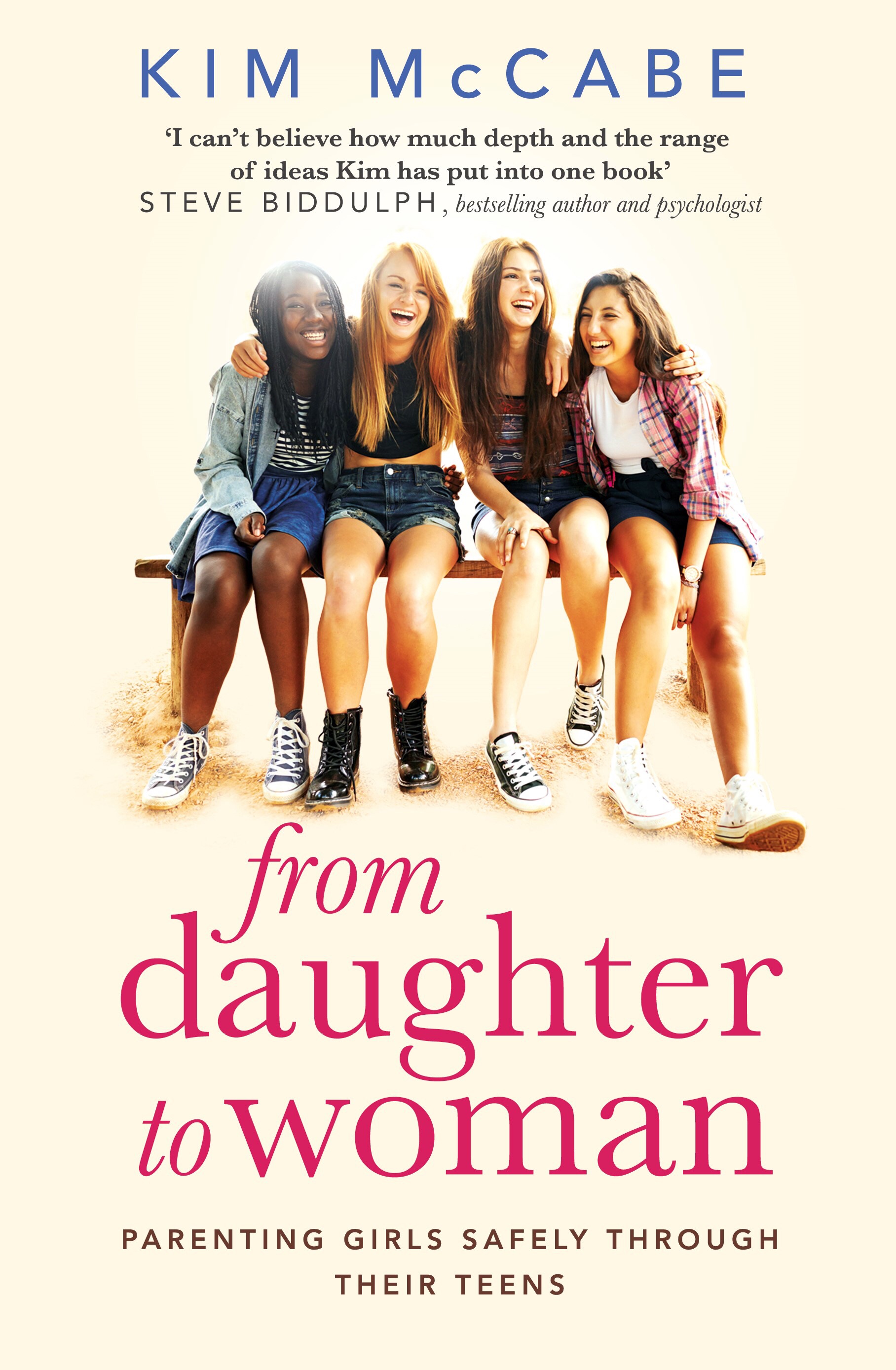
Guest Post – Social Media Safety
by Kim McCabe, author of From Daughter to Woman, parenting girls safely through their teens
My daughter’s phone died. I braced myself for her panic at being disconnected. It didn’t come, she quite liked having a social media ‘holiday’… for a few weeks. Then she needed to get back in the loop, she was missing conversations, photos, gatherings. But after not having a phone for a while, she was a bit more aware of how easy it was to lose time on it and how it didn’t always make her feel too brilliant.
Teen depression. We all like to blame social media. We’re a bit afraid of it when we see the hold it has over our kids. We’re right to be cautious, it’s definitely having an impact on teen mental health. We don’t want our girls to be basing their opinion of themselves on how many ‘likes’ they can earn. Or ending up exhausted before the day has begun because they were messaging until 2am. Or doing things for the boys because that’s what they’ve all seen online.
Our children are growing up in a world that’s populated by digital delights that we never knew. We’re going to have to learn about how they work before we can teach our kids how to stay healthy in this new culture. This is nothing new, parents have always struggled with whatever’s the latest craze. Kids love it and we tend to see the downsides of it.
If you want to be able to influence your child’s social media habits you can’t be completely down on it. Think about it from your child’s point of view: if you don’t have control over your home, own a car, or have much money and here is a device which puts you in touch with your friends and a world that you don’t have easy access to any other way. What’s not to like?
Here’s the way forward:
• Ask her to teach you about the platforms that she likes.
• Sign up to some yourself so that you can see what’s going on.
• Find out what you need to teach her to stay safe (like turning off location functions, not giving personal details and not meeting people you’ve encountered online; there’s more, find out).
• Ask her what she sees online that bothers her and discuss it without being judgmental or she’ll clam up.
• Find out what happens to everything digital, so you can explain it to her.
• Give her the 1-second-check idea, suggesting she pause before pushing send to ask herself what would my granny or boss think of this?
• Show her videos of how photoshop changes what we’re shown.
• Reassure her that it’s normal to be curious but if ever she sees or hears anything she wishes she hadn’t, she can come to you, no blame.
• Have a night-time parking place downstairs for phones. No phones at bedtime; buy an alarm clock.
• Suggest a ‘mood check’ after time spent with social media so she’s aware of when it’s doing her good and when it’s not. Encourage her to notice what feels positive (the connection, the fun) and what doesn’t (comparing, mean comments).
• Set a good example yourself.
Our duty as parents is to take care of our children and gradually to hand that job over to them. So, when she’s little you install software safeguards and set rules. As she gets older, the safety filters are going to have to come from inside her, so your job turns into how to help her do that. First. She’s going to need to understand why she’d want to. Then, you’ll need to guide her how to use social media safely.
If you think she’s running into difficulties, you need to show that you’re on her side. If she’s not having a nice time online, chances are she’ll feel like it’s her fault and shame will make it harder for her to tell you. If she seems to be relying on ‘likes’ to feel good, and then feels low after the high, help her to notice that. If you think she’s got a bit hooked and you judge her, she’ll just get defensive. Telling anyone of any age that they’re addicted to something is the last way to get them to stop. Never make her wrong. If you want to get through to her, the two of you have to be able to talk to each other without accusing or criticizing. If you want an easy way to get these conversations going, go on a Mother-Daughter Date once a month.
It’s the way to get real-life ‘likes’ from her!
Wow. What a great post. Thanks Kim. Some useful pointers for social media using adults here too!
Summary:
This book aims to make the adolescent’s journey just that bit safer, kinder, and better supported – so parents and teens can enjoy the teenage years more.
The teen years are tough – for teens and for parents. Many parents dread the moodiness, dishonesty, preference of friends over family, exam stress, and the push for greater independence. Mothers have a pivotal role to play; this is a guidebook for parents and mothers of girls in particular as they navigate the rocky teenage landscape with their daughters aged 8 to 18. It aims to help them embrace the potential of their child’s teenage years by marking this time of growing maturity for girls and celebrating it with them. We celebrate birth, marriage and death, but this important life-transition from child to young adult is nowadays rarely acknowledged within an appropriate community.
Author
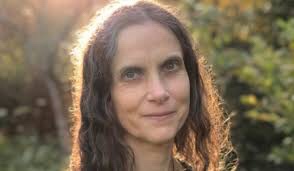
Kim McCabe is the founder of Rites for Girls. As the originator and facilitator of Girls Journeying Together groups, she offers guidance to preteen and teen girls and simultaneous support for their mothers. In training other women to facilitate these groups, her dream is that every girl grows up expecting to be supported and celebrated in adolescence. Kim was commissioned to write a section in Steve Biddulph’s latest best-selling book, 10 Things Girls Need Most: To Grow Up Strong and Free.
Kim is a home-educating mother of two boys, one girl, two cats and a colony of aloe vera plants; she is wife to a Kiwi, daughter to itinerant parents, friend to a cherished few, and lover of time alone, too. She lives in the Ashdown Forest in Sussex. She sometimes shouts at her children, accidentally steps on the cat’s tail and forgets to water the plants, but she loves her work, her family and her life. She has always had deep affinity with teenage girls, and by sharing her wisdom and compassion she infects the reader with her enthusiasm for this life stage.
From Daughter to Women is out July 18th published by Little Brown and is sure to be invaluable for those raising teenagers. It includes topics such as puberty, periods, relationships and wellbeing and I love the concept of Mother-Daughter dates.
Do check out the rest of the blog tour.
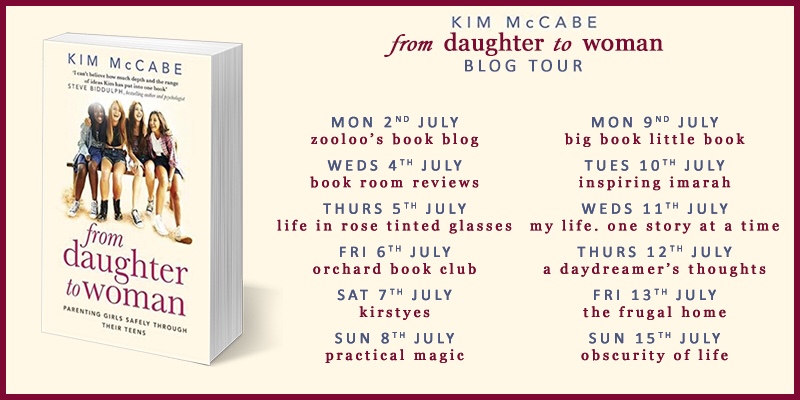
Thanks to Faye Rogers for also proving a PDF which I’m looking forward to reading.


 kirstyes