The White Hare by Michael Fishwick – Blog Tour (Guest Post)
I’m very pleased to introduce The White Hare, and Zephyr to you today. The White Hare by Michael Fishwick is the launch title for Head of Zeus new children’s imprint, Zephyr.
This beautiful hardback book is a lyrically mythical delight. Michael Fishwick, already the author of two novels, Smashing People and Sacrifices has kindly written a guest post on dealing with death in children’s books.
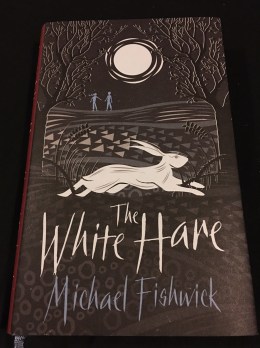
Robbie doesn’t want anything more to do with death, but life in a village full of whispers and secrets can’t make things the way they were.
When the white hare appears, magical and fleet in the silvery moonlight, she leads them all into a legend, a chase, a hunt.
But who is the hunter and who the hunted?
Strangely, both my first two novels began with a death, and I’m not entirely sure why. I remember showing the opening pages to my wife, because I was worried her father, who seemed old then, to me, might die as I wrote the book and I didn’t want to jinx it, or him. As it turns out, he’s still very much alive at ninety-six, though sadly my own parents died as I wrote The White Hare, something that took me years to address and some of the effects of which worked their way into Robbie’s own experiences.
When I write I don’t have a target reader in mind. I want you, the reader, to be drawn in and entranced, held captive by the fiction, and I want to create a reliable and absorbing texture. What interests me, above all else, is how we experience our lives as human beings. For me, both in my day job as a publisher and as a fiction author, writing is part of a journey to understand and as importantly feel what those experiences are all about.
In Robbie’s case, I wanted to develop a vibrant and suffering voice, one that is experiencing adversity and facing up to it. I wish that when I was being bullied at school I could have responded with the tough, leathery bravado that Robbie does. Once, I was in the local library and I was just leaving the children’s bit to find my dad on the other side of the building in the adult bit (this was in Dulwich, south London) when some boy who seemed twice my height took my books and put them on top of a van where I couldn’t reach them. He then asked what I was going to do about it. I stood there, my eyes on a level with his stomach, and I knew what I should do, I should drive my fist into his stomach as hard as I could; but I quailed, and ran. My little brother had seen what was going on and scooted ahead, so I found my dad belting out of the library towards me. I’ve never seen anyone box anyone’s ears before or since, but that’s what he did to the bully.
So when thinking about Robbie and his mother’s death I really wanted to get the essence of the relationships and the emotions. A lot was based on my own childhood in south London; my parents then went abroad and I was sent to boarding school, and at the age of fourteen was hauled into my housemaster’s study to be told my beloved aunt had died of cancer. I was fourteen. I had no idea how to respond; I had enough on my plate with the bullying. She was witty and kind and read PG Wodehouse and made me sandwiches with very thin bread when she took me out of school and we sat under the lamplights on Clapham Common in her dark green mini before she took me back. With Robbie, his response was to go wild and burn things; it’s all about anger, an emotion that fascinates me. At that age I think death is incomprehensible. I remember realizing that I would die, again at boarding school with no one to turn to, when I was about twelve. So I just didn’t think about it for a long time. But when writing about Robbie I wanted to get down the essence of the experience on paper. With Fran, who chooses it, it seemed a natural part of the white hare legend, and here I wanted to write about the ruthless brutality of love in one of its aspects (in another it is kind and forgiving, of course). When someone chooses to kill themselves, some react with horror and a lack of forgiveness, but I think of the depth of sorrow and madness and churning feelings that make you not want to exist anymore.
What I am really trying to do in The White Hare is through imagination and empathy find a way of confronting and defying the reality of death, and that whole process begins for all of us in childhood.
My Thoughts
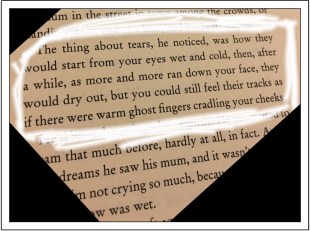
I really enjoyed this story and oddly it reminded me of Watership Down and the film Lady in White in its tonal quality. The image below, a sentence about tears, shows a flavour of the beautiful writing in this book. I would describe the genre as magical realism because it is through the supernatural and mythical elements that Robbie, his friend Mags, his father, and the reader learn more about, and begin to deal with the nature of death. I think I might need to re-read to fully appreciate all the nuances. I liked how Robbie is just friends with two girls and it was refreshing for romance not to be a main element. I also felt the rural and seasonal setting added an certain innocence to which the violent episodes in the book was in stark contrast. It’s interesting to see the author write about his personal experience of bullying and then how that is played out in the book (I’m not sure I entirely agree with the method Robbie uses on occasion). I could really see this as a Sunday afternoon BBC family series, in the vein of Moondial. Gosh this book is bringing back memories. If you like your stories lilting and poetic do give this one a read.
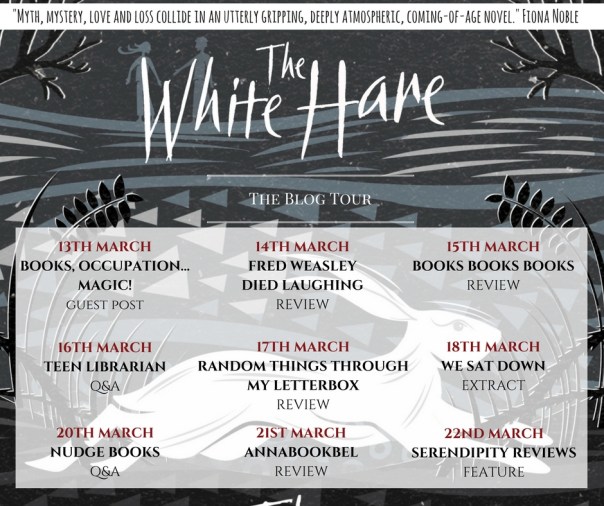
Huge thanks goes to Blake at Head of Zeus for the copy and to Michael for sharing this story. My opinions are, as ever, my own. Please do check out the tour banner below and head along to the other stops to learn more about The White Hare. I look forward to seeing what other books Zephyr has to offer.
Share this on Facebook, Twitter and Google+

Something Missing – Blog Tour and Giveaway
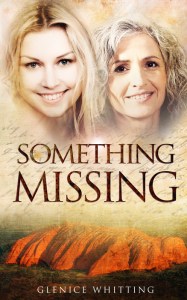
About the Book
Two women, two countries. Serendipity, life, friendship
Diane, a young Australian mother meets Maggie, a sophisticated American poet, in a chance encounter. Everything – age, class and even nationality – separates them. Yet all is not quite as it seems. Maggie is grieving for her eldest daughter and trapped in a marriage involving infidelity and rape. Diane yearns for the same opportunities given to her brother. Their lives draw them to connect. This is the story of two unfulfilled women finding each other when they needed it most. Their pen-friendship will change them forever.
Something Missing is published by Madeglobal Publishing and is available from:
Book depository (free postage)
Amazon and Amazon Kindle
About the Author
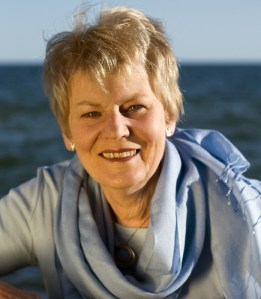
Glenice Whitting is an Australian author and playwright and has published two novels. She was a hairdresser for many years before she became a mature age student. It was during an English Literature Fiction Writing course that her great midlife adventure began. Rummaging through an old cardboard shoebox in the family home she found a pile of postcards dating back to the 19th century, many of them written in Old High German. The translated greetings from abroad introduced the hairdresser to her long hidden German heritage and started her on a life changing journey. She fell in love with the craft of writing and decided to pursue a writing career. Her Australian/German novel, Pickle to Pie, was short -listed for the Victorian Premier’s Literary Award for an Unpublished Manuscript. It co-won the Ilura Press International Fiction Quest and was launched during The Age Melbourne Writers’ Festival.
Three years as an on-line editor and columnist at suite101.com introduced her to web writing and resulted in an ebook Inspiring Women. Glenice’s play Hair Today, Gone Tomorrow was produced during the Fertile Ground New Play Festival. Her published works include biographies, reviews, numerous short stories and two novels. Her latest novel, Something Missing, published by MadeGlobal Publishing is about two countries, two women and lies that lead to truth. She completed the journey from VCE to PhD when she gained her Doctorate of Philosophy (Writing) from Swinburne University in 2013. Along the way she was awarded entry into the Golden Key International Honour Society for academic excellence. She currently enjoys teaching Memoir Writing and encouraging other women to write their stories. Glenice’s blog Writers and Their Journey can be found at her website, www.glenicewhitting.com
About Friendship
What makes a good friend?
This question really got me thinking about the many friendships I’ve had over the years. Friends who have come into my life at a particular time to support, help and advise. Childhood friends, hairdressing friends and academic friends. Many became lifelong friendships but none have been as constant, or as inspirational as my thirty-five year pen-friendship with an older American poet. Something Missing is based on that pen-friendship because I wanted, through my writing to try to work out why this friendship, in spite of the odds, survived. What was it that made it last all those years and endure the ups and downs of life which so frequently destroy relationships? A clue for me was a quote I use at the beginning of the book by American author, Irving Stone, ‘There are no faster or firmer friendships than those between people who love the same books.’
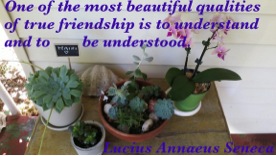
One of the most beautiful qualities of true friendship is to understand and be understood. When I began writing our story I never meant to write a novel. I set out to record our friendship and letters in an attempt to understand how and why our chance meeting permanently changed us. Why this pen-friendship inspired my academic journey from VCE to PhD. I also wanted to reveal how fragile friendships can be, how easily they can break only to lead to truth when both parties finally understand and are understood.
I am always amazed how friends come into our lives when we need them most. It was a chance meeting at our camp on Coopers Creek near the Bourke and Wills Dig Tree in Outback Australia. I was thirty-five and working full time as a hairdresser, plus being a wife and mother. However, I always felt there was something missing in my busy life. My campfire friend was sixty. I didn’t know it at the time but her adult daughter had commited suicide the year before and left a permanent hole in my friend’s heart.
She came from well educated parents, married her much older college professor and researched and typed his published journal articles. They had retired and she was so proud of his success. I grew up in a working class family where boys were educated because they would become the bread winners. My fate was to go to a Domestic Arts school to learn cooking, sewing and how to balance a budget for a family of four. The only book we had at home was The Bible. Everything – age, class and even nationality – separated us. However, my pen-friend’s educated letters, although often intimidating, also inspired me. She wrote about interesting people and exotic places, recommended books and poetry to read. She opened my eyes to a world of literature. I never replaced her daughter but became her work in progress. My pen-friendship put a band-aid over the hole in her heart.
I started writing our story as part of my PhD by artefact and exegesis at Swinburne University. By this time my pen-friend was over ninety. When she died I was devastated. I know I should have expected it but somehow I felt that my friend would always be there. My writer’s journal remained closed, the novel and exegesis frozen. How to write the unsayable? I could not continue. The story, balanced between fact and fiction meant that half my writing was in the real world. I was telling another woman’s story as well as my own. I had worked through many writing issues, and told numerous stories of literary and personal goals, but I came full circle when faced with my pen-friend’s death. At the heart of the novel were two real women. Now one was lost and the other one was grieving.
Time is a great healer, and by moving more into fiction I finally finished a third rewrite, now titled Something Missing. My pen-friend’s life is permanently part of mine. I miss her feisty nature and her wisdom and bless the day we met on the banks of Coopers Creek.
Thank you Kirsty for hosting me on your blog site. It is greatly appreciated
Giveaway
On 1st March I will randomly pick one person to win a copy of Something Missing. All you have to do is comment below with your idea on ‘what makes a good friend‘.
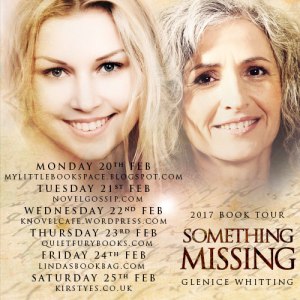
Do also check out the earlier stops on the blog tour
Share this on Facebook, Twitter and Google+

Share your Fandom -Baker Street Academy Blog Tour
As a Harry Potter fan I know that when I have children I won’t have to wait too long to share my fandom with them, but what about if your fandom generally has content that is a little more mature – take Sherlock for example.
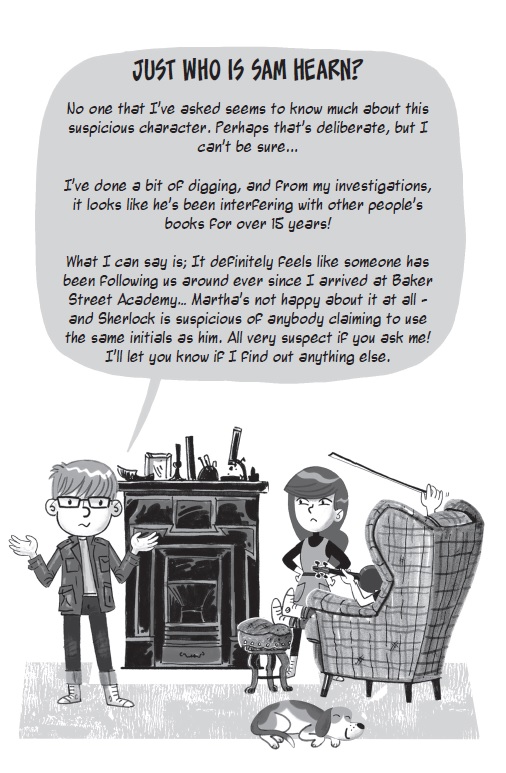
Well, Sherlock fans, Sam Hearn and Scholastic have you covered. Out now is the first of a new middle grade graphic novel series based on the adventures of a young Sherlock Holmes at Baker Street Academy.
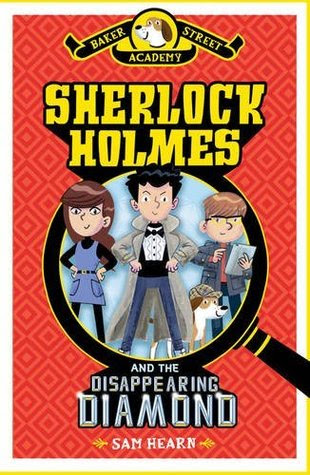
In the first case – Sherlock Holmes and the Disappearing Diamond – John Watson has just settled into Baker Street Academy when a school trip to a museum to see the world’s most famous jewel is planned. BUT it’s been stolen!! Can Sherlock save the day? Now, I’ve not had an opportunity to read this yet but I reckon some thieves are going to be wanting to ban school trips to any of their future heist locations.
What fandom of yours would you want to get the middle grade treatment so that you could share your excitement with the next generation?
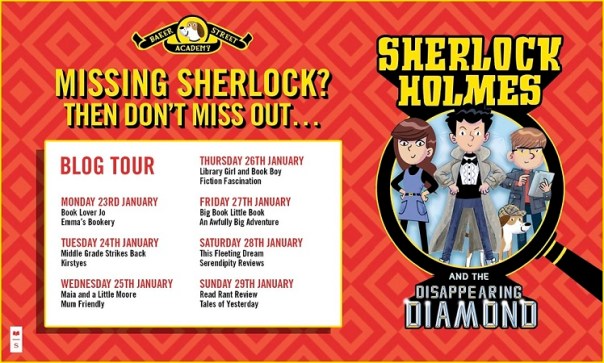
Do check out the rest of the Blog Tour at its other stops


 kirstyes