Category Archives: OT/Lecturing/PhD Reviews
H is for… Heroine #AtoZChallenge
H is for… Heroine
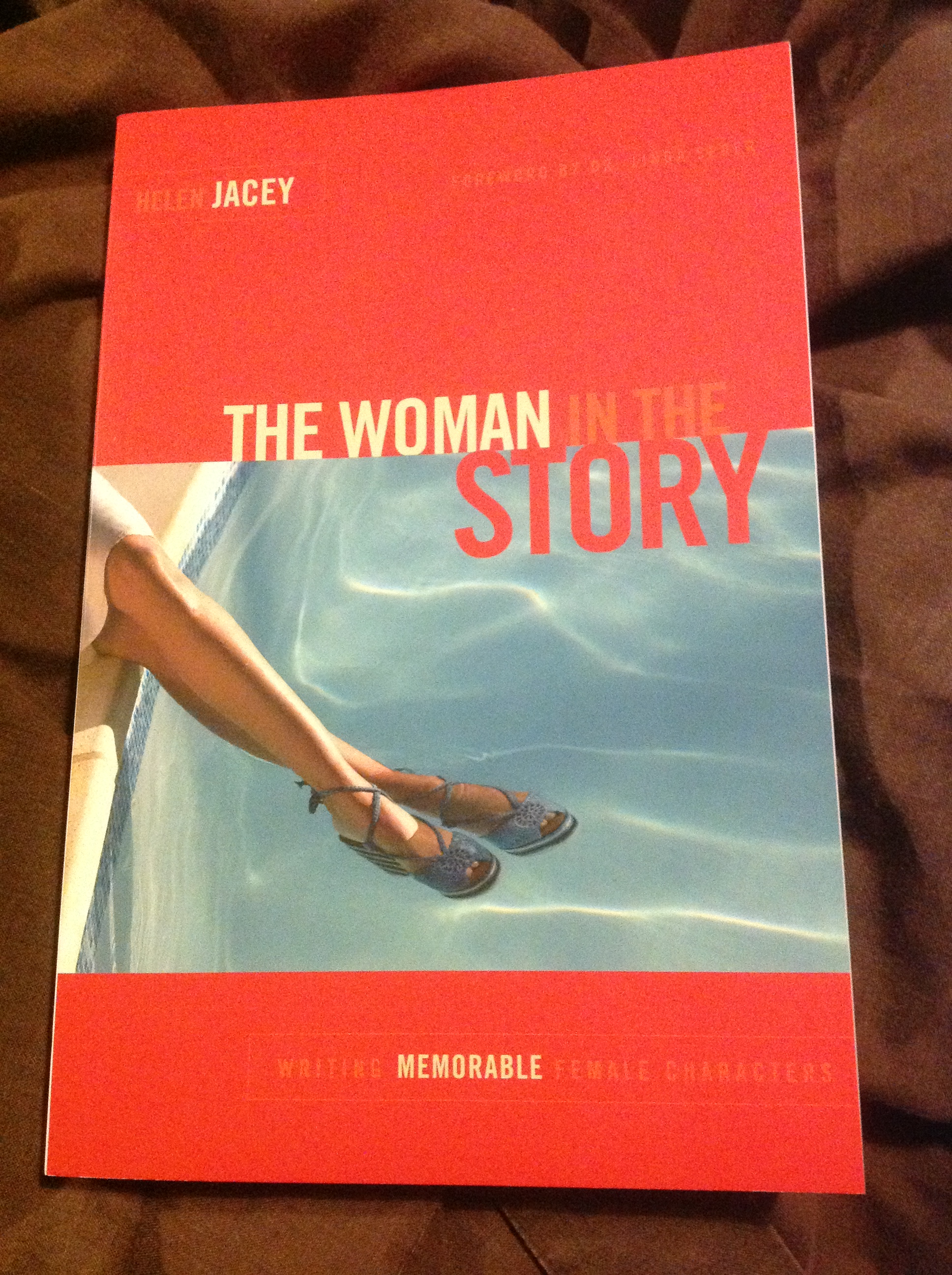
I was introduced to the book ‘The Woman in the Story: writing memorable female characters’ by Helen Jacey (Amazon Associates link) recently and was discussing it with a friend when they made a suggestion that has stuck in my mind.
Those writers amongst you will be familiar with the idea of the Hero’s Journey as plotting guidance for writing (here’s a cool interactive website that gives you basic information about it). Helen Jacey starts in the introduction to her book (p.xv) by saying ‘But none of the screenwriting guides have paid much attention to the difference between men’s and women’s lives and to what happens if the hero is a heroine.’
Now, once again I haven’t had chance to read this book but it may be useful to my PhD because of what my friend suggested. I mentioned back in the ‘A’ post that I was planning to use autoethnography as a research methodology and as I’m a woman surely I will be the “Heroine” in my own story so the guidance provided here might help me share that story in an interesting and engaging way.
Thanks Clarissa for the suggestion.
So do you think stories with female protagonists follow a different structure?

Share this on Facebook, Twitter and Google+

G is for… Graeme Harper’s Interviews with Contemporary Writers (Inside Creative Writing) (Book)#AtoZChallenge

G is for… Graeme Harper’s Interviews with Contemporary Writers (Inside Creative Writing) (Book)

Image of my edition via my tumblr blog
Unfortunately I’ve not had chance to read this book but a quick scan through suggests it will be an enjoyable one.
Like my last post it is a book where writers ‘talk’ about writing.
When I first got it and had a look I did think that the project that Graeme Harper had undertaken is similar to what I want to do for my PhD so the first thought was panic because PhDs are all about originality. Mine will have the added occupational science slant and I’m sure/I hope I will be taking a slightly different focus.
He basically asked fifteen questions of fourteen contemporary writers including Iain Banks, Nadine Gordimer and Philip Pullman.
The questions were all about the process of creative writing on the following themes:
1. Beginning Creative Writing
2. Creative Writing and Others
3. Passions for Creative Writing
4. That Word ‘Creative’
5. The Idea of Drafting
6. Other Creative Writers
7. Creative Work-in-Progress
8. Creative Writing Habitats
9. Knowledge: Subject and Themes
10. Writing Craft and Skills
11. Reading and Not Writing
12. Other Practicalities
13. Exploring Creative Writing Exercises
14. Asking Another Writer a Question
15. Past, Present and Future
Graeme writes an overall introduction and conclusion and there is an introduction to each chapter, the responses of the writers interviewed and each concludes with an exercise and reflection point. Like the last book this has an academic slant but it seems very accessible.
I think this will be a very useful and necessary text for me to read cover to cover – it’s on the very long list.
Who would be your top writers to interview?
Share this on Facebook, Twitter and Google+

F is for… First We Read, Then We Write: Emerson on the Creative Process (Book) #AtoZChallenge
F is for… First We Read, Then We Write: Emerson on the Creative Process (Book)

Picture of my copy from my tumblr
I have read the whole of this book over the last couple of days (it is only short – about 90 pages of writing in total). In terms of Goodreads, I have given it three stars (which according to my sidebar means – Liked it (I enjoyed it enough and may read it again but it didn’t fully grab me)). Now, this probably isn’t really all that far because it is kind of an academic type text so it was always going to be trickier to get a 4 or 5 star rating (though on the other hand there have been some academic texts I have wanted to – or possibly even have – kissed!!). In terms of my PhD – it has a few potentially useful bits in there.
This is a concise book written by Robert D. Richardson which combines an biographical ‘study’ of the writings on writing of the poet and essayist Ralph Waldo Emerson, with some snippets from Emerson’s writings/journals etc. It is split into 12 short sections such as ‘Reading’, ‘Sentences’, ‘Audience’ and ‘Writing’.
I enjoy reading writers writings about writing (!!!) and that is what attracted me to this book. I guess then that I felt that there wasn’t enough of that and too much analysis (see I said I was being unfair). I also didn’t really know anything much about Emerson and didn’t feel I truly got to know him from this book. Funnily enough after struggling with the Dialogism book some of what was said in this book I made links back to that which helped with my comprehension.
That being said I will share with you a few snippets/quotes that I enjoyed and that speak to my experiences.
‘He generally took more books out of the library than he was able to read before they were due back.’ (p.8)
Emerson once noted that Coleridge had identified four classes of readers:
The hourglass – gives back everything it takes in, unchanged
The sponge – gives back everything it takes in, only a little dirtier
The jelly-bag squeezes out the valuable and keeps the worthless
The Golconda runs everything through a sieve, keeping only the nuggets. (p.8)
(Emerson was a Golconda and I’m not sure if I’m a sponge or Golconda – need to find out more about this – if you have any useful links which add anything please share them with me in the comments.)
‘Each of the books I read invades me, displaces me.’ (p.10)
‘He was reluctant to speak of the meaning of a book, and eager to affirm the idea that there would be as many meanings of a book as it had readers.’ (p.13)
‘Reading long at one time anything,…destroys thought as completely… Stop if you find yourself becoming absorbed.’ (p.15)(To Emerson reading was to be useful to his writing – personally I disagree and love nothing more than getting absorbed in a good book which can leave me thinking for ages afterwards if I let it).
‘The way to write is to throw your body at the mark when your arrows are spent.’ (p.24)
It appears he was a ‘pantser’ not a ‘planner’ (one in the quote referring to plan) – ‘The natural one will grow as you work.’ (p.25) (Mind you with poetry isn’t that easier?? I’m a pantser whatever so maybe there are some meticulous poetry planners out there – are you one?)
‘The most interesting writing…is that which does not quite satisfy the reader. Try and leave a little thinking for him…’ (p.36)
Richardson argues that Emerson’s essay ‘The Poet’ suggests that ‘…expression, including self-expression, is a basic human need, and is the fundamental function of literature.’ (p.71) (Interesting concept in terms of my planned research).
‘The real Emerson also knew that it required courage for anyone – but especially for a young person – to stand up and say publicly, “I will be a writer”.’ (p.84)
What Emerson poems do people recommend I read?
Do you relate to any of the quotes above?
(Snuck this post in at about a minute to midnight)


 kirstyes