Blog Archives

Queer Up by Alexis Caught – Blog Tour Book Extract

Hi all and welcome to my spot on the blog tour for Queer Up by Alexis Caught. Today I’m sharing an extract from the book on Allyship.
About the Book
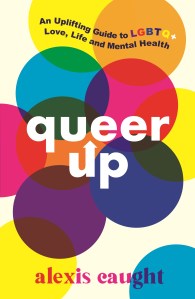
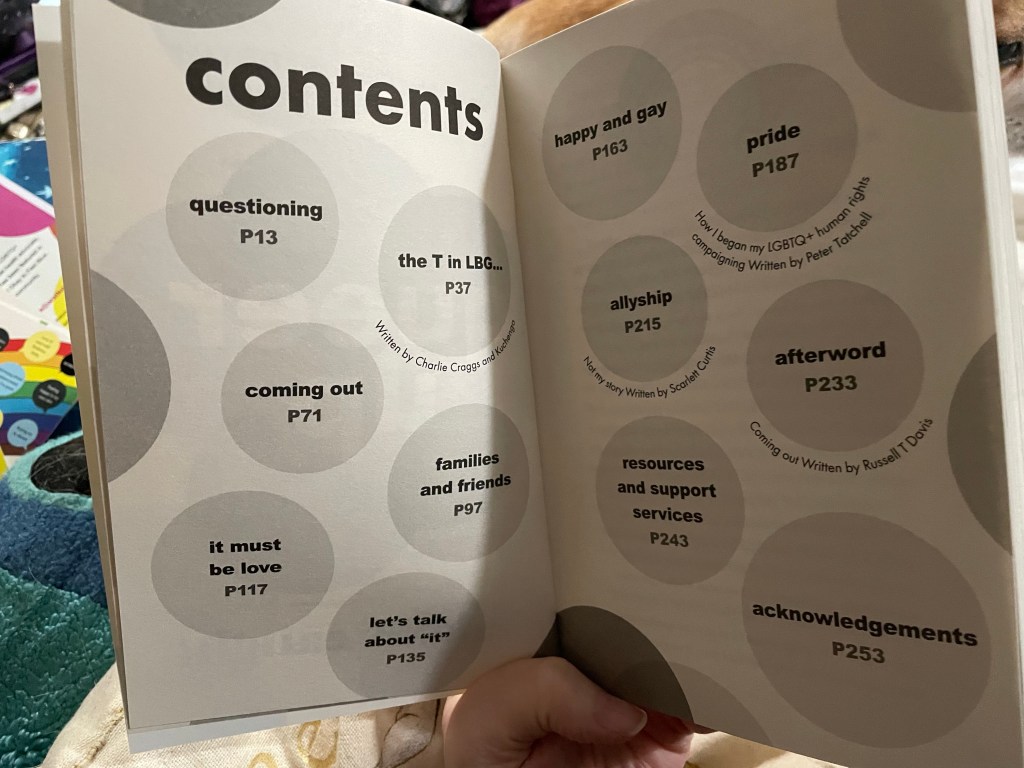
Queer Up is an insightful and empowering guide which takes young people by the hand, and offers uplifting advice and activities to help readers through life’s challenges and instil them with confidence and pride. The book provides an inclusive account of what it means to grow up queer, with chapters on questioning, coming out, friends and family, love and relationships, sex, shame, pride, being transgender and/or non-binary and allyship, with a key focus on positive mental health strategies. The book also features personal stories from notable LGBTQ+ figures and allies, including award-winning transgender activist Charlie Craggs, author and journalist Kuchenga, human rights campaigner Peter Tatchell, writer and producer Russell T Davies, and writer and activist Scarlett Curtis.
Walker Books will be donating 20p for every copy sold to Shout 85258, a free, confidential, 24/7 text support service for anyone in the UK who is struggling to cope, for which Alexis is an ambassador and trained mental health volunteer. 45% of young people who text Shout 85258 identify as LGBTQ+.
“This books is like a big, queer hug, every bit of advice is a lesson in how to be confidently LGBTQ+ and happy.” – Dr Ranj Singh
About the Author

Alexis Caught is the creator and co-host of the British Podcast Award-winning LGBTQ+ podcast Qmmunity, exploring queer culture, history and identity. He is also a mental health advocate, qualified psychotherapist, writer, speaker, model and rugby player. His writing has been featured in Attitude magazine and The Mirror along with the best-selling anthology It’s Not Okay to Feel Blue. His areas of passion and expertise are mental health, wellness and the queer community. On talking about the book, Alexis said this is the book that he “so desperately needed when [he] was 14.”
Extract on Allyship
What does an ally do?
Take a minute to think about what you’re actually, proactively doing to support LGBTQ+ people.
• Whether you know them or not, if you see or hear someone being made fun of, are you speaking up or is your silence deafening?
• When you’re with friends and your unfunny mate tells another gay joke, are you challenging them or are you just not responding?
• When the phrase “that’s so gay! ” gets thrown about, are you challenging them or are you letting it slide in a way you’d never let someone say “that’s so Black” or “that’s so Jewish” as a way of meaning something bad?
• If somebody is outed or gossiped about, are you indulging in the gossip and spreading rumours or putting it to bed with a “so what?” and expecting better of your friends.
• When considering what television show to watch, do you think about what kind of jokes the characters make or what message their storylines are sending? Do you stop watching it if hosts or characters say homophobic or transphobic things? When you think about how much you like other celebrities, are you considering their behaviour and the things they’ve said?
• If a problematic relative is going off on one about how “everything’s too liberal these days” are you just letting them dominate and set the tone or are you making it clear that no, you don’t agree, and speaking about people in derogatory ways is not OK?
• If you have siblings, cousins or friends who may be LGBTQ+, are you helping to make sure that they know they are free to be themselves and express themselves however they like around you? And that you love and support them unconditionally?
• Are you actively creating a safe space that your friends can go to and be their authentic selves, knowing they can trust you and that you’ll never share their secrets or judge them?
I apologize if you found the last few paragraphs confronting, uncomfortable or challenging. Self-reflection is often very uncomfortable. Thank you for sticking with it. We need to be able to have uncomfortable conversations to get anywhere. The starting point of doing better is always reflecting on how well we’re doing now. But I also want to clarify — if you found yourself awkwardly recognizing that you might be guilty of some of those behaviours, I don’t blame you. I don’t think you’re a bad person. I don’t believe there is a single person on this earth who isn’t at least 0.1 per cent homophobic — even LGBTQ+ people can be, and are, homophobic or transphobic. All of us are a little bit because it’s how we were raised. But that’s not an excuse and it’s up to us to educate ourselves and do better.
Education plays a huge part in becoming a great ally. The first step (and it’s a continual process) is to educate yourself — and you’re already doing that! So, whether or not you already knew that when you picked up this book, you’ve already taken a great step forward and I’m so pleased to have you on this journey with us — your friends and siblings will be too.
What is not allyship?
Being an ally is not a fixed status, one that you achieve once and then get to not think about again. It is something that must be consistently practised, regardless of who is around us. Allyship is not a party trick, something you perform in front of us and other people for praise. Being an ally is something you do when we’re not in the room and, even more importantly, when you’re then the odd one out for calling out queerphobic behaviour.
Being an ally is not a title you can award yourself, it is earned and given to you by those you support. Importantly, it’s also not an opportunity to put yourself in the spotlight. Think of it like this: in most films and TV shows queer characters are sidelined and become “the gay best friend” and are just a token. But this is our film, we’re the main characters and a good ally is a supporting cast member.
Power and privilege
Without allyship, what is friendship and support of the LGBTQ+ people around you? Being neutral is only an option for people with privilege and power. There is nothing inherently wrong with having that privilege or power, that isn’t your fault as you didn’t decide to have it (just as we didn’t decide to be queer) — but what you do with it is your decision.
Whatever the equality and rights movement, it needs allies, but they cannot be centred within the conversation, otherwise a space and a movement designed to bring greater power to a minority can quickly become a place where that minority is once again marginalized and made a side feature in their own story. All too often this happens to LGBTQ+ people — in particular to women, people of colour and trans people as sexism and racism are still social issues within the LGTBQ+ world.
The important thing for an ally to do is to use their inherent power and privilege to help others. Don’t change the narrative of our story to build up your part or get more lines. Instead, please tell our stories and share our stories. Use your voice, your power, for that. Echo us, don’t talk over us.
Copyright © 2022 Alexis Caught
Cover design and Illustrations © 2022 Walker Books Ltd.
From QUEER UP: AN UPLIFTING GUIDE TO LGBTQ+ LOVE, LIFE AND MENTAL HEALTH by Alexis Caught
Reproduced by permission of Walker Books Ltd, London, SE11 5HJ
Being an Ally is a constant journey and reading books like this to educate ourselves and find out more about why our Allyship is needed is a really good place to start.
Check out the other spots on the tour. Thanks to Walker for the #gifted copy of the book, the pin and the postcards.
Share this on Facebook, Twitter and Google+


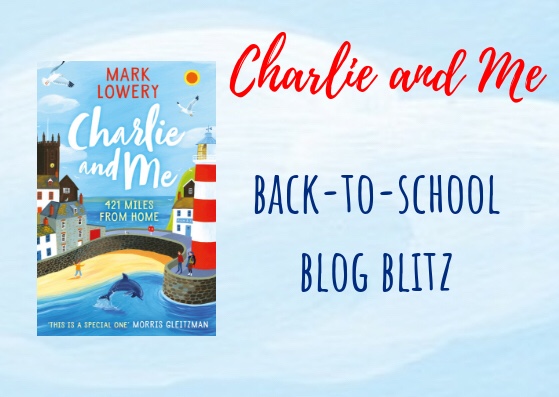
Charlie and Me by Mark Lowery – Back-to-School Blog Blitz
The Summer holidays are over but the feelings don’t have to be when you are reading a good book.
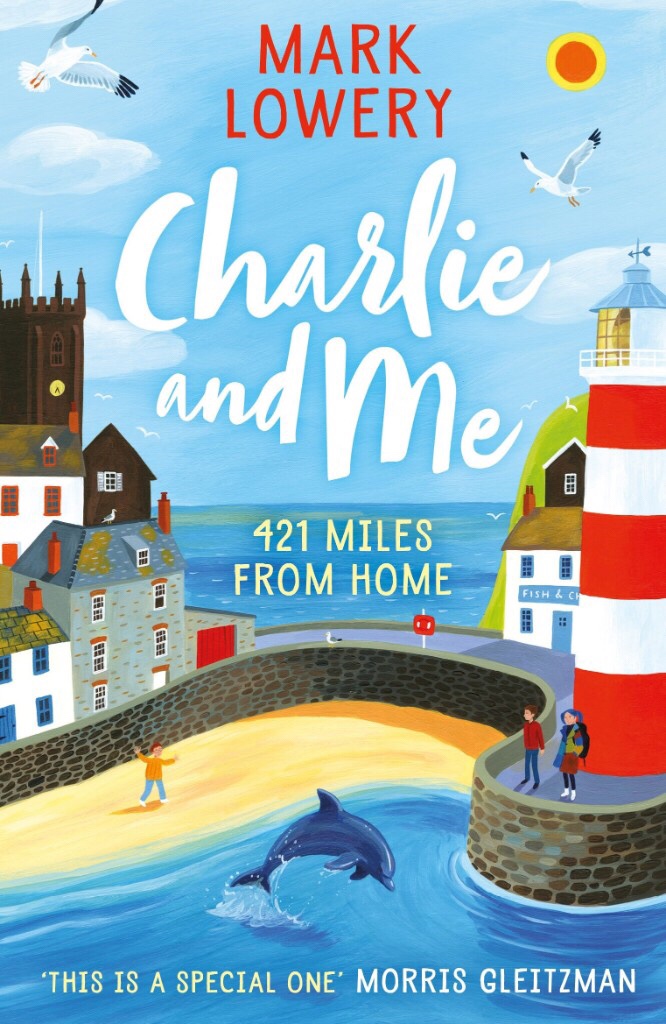
Charlie and Me: 421 Miles From Home is a Middle-Grade novel and a poignant story of families and running away. Brothers Charlie and Martin are on a very special trip down from Preston to Cornwall. They’re desperate to see the dolphin that lives in the harbour there. But although Martin’s used to looking after his younger brother, this is a very different journey for both of them – there’s something even bigger than the dolphin waiting for them once they get to Cornwall.
If you’re looking for a book to help you rewind these last few weeks of summer holidays with empathy and joy, this is the one for you!
I’m pleased to be able to share an extract with you as part of the Back-to-School Blog Blitz.
The town was just waking up – the smell of fresh bread from bakeries. Shopkeepers dragging racks of flip-flops and beach balls out of shops called Wild Bill’s Surf Shack or Bob’s Budget Beach Hut. Street cleaners emptying bins and aiming half-hearted kicks at the cocky seagulls that scrounged around the cobblestones.
We’d been roaming about for a few minutes before we caught a glimpse of the ocean – a narrow strip of blue between two cottages. ‘Might as well have a peek,’ Dad said. We followed a steep lane until it opened out onto the seafront, and WOW!
It was incredible.
The town nestled above a bay about a quarter of a mile wide. It was a perfect semicircle, like the sea had taken a great big bite out of the land. Colourful cottages seemed to tumble higgledy-piggledy down the slope towards it. The tide was right in and fishing boats bobbed up and down on a sparkling sheet of turquoise. To our right, the bay was fringed by jagged rocks that concealed the rest of the coast. At the far side over to the left, an old stone jetty stretched out to sea, with a small white lighthouse perched at the end of it.
Dad whistled.
Mum squeezed his hand and said, ‘Beautiful.’
‘What are they looking at?’ said Charlie, squinting at a huddle of people on the other side of the road. There were about seven of them standing by the railings and pointing out to sea.
Charlie didn’t wait for an answer. He darted across the road, right in front of a car that screeched to a halt just in time. The rest of us chased after him. On the far pavement, Mum grabbed him by the arm. ‘Don’t you ever do that again. I couldn’t bear—’
But Charlie wasn’t listening. ‘Wow!’ he said, pointing past Mum. ‘Look at that!’
‘What?’ said Mum, her fingers instinctively relaxing as she turned to look.
Charlie wriggled out of her grasp, peeled off his eye patch and pressed himself up against the railings. ‘That! Behind that big blue boat. Next to the dinghy.’


 kirstyes